
Checking Bulk Garments Against Approved Standards
Quality inspection for denim garments should be based on confirmed references rather than general descriptions such as “good quality.” For OEM jeans, denim shorts, overalls and flare jeans, the main references are the approved sample, measurement chart, construction specification, wash standard, trim approval and packing instructions.
Inspection takes place at relevant production stages so problems can be identified before they affect the complete order. Checks may cover sewing construction, garment measurements, wash appearance, hardware, branding, finishing and packing.
The inspection scope and acceptance requirements should be agreed before bulk production, particularly when the buyer has specific tolerances, testing requirements or an appointed inspection procedure.
 Measurement Points and Size Tolerances
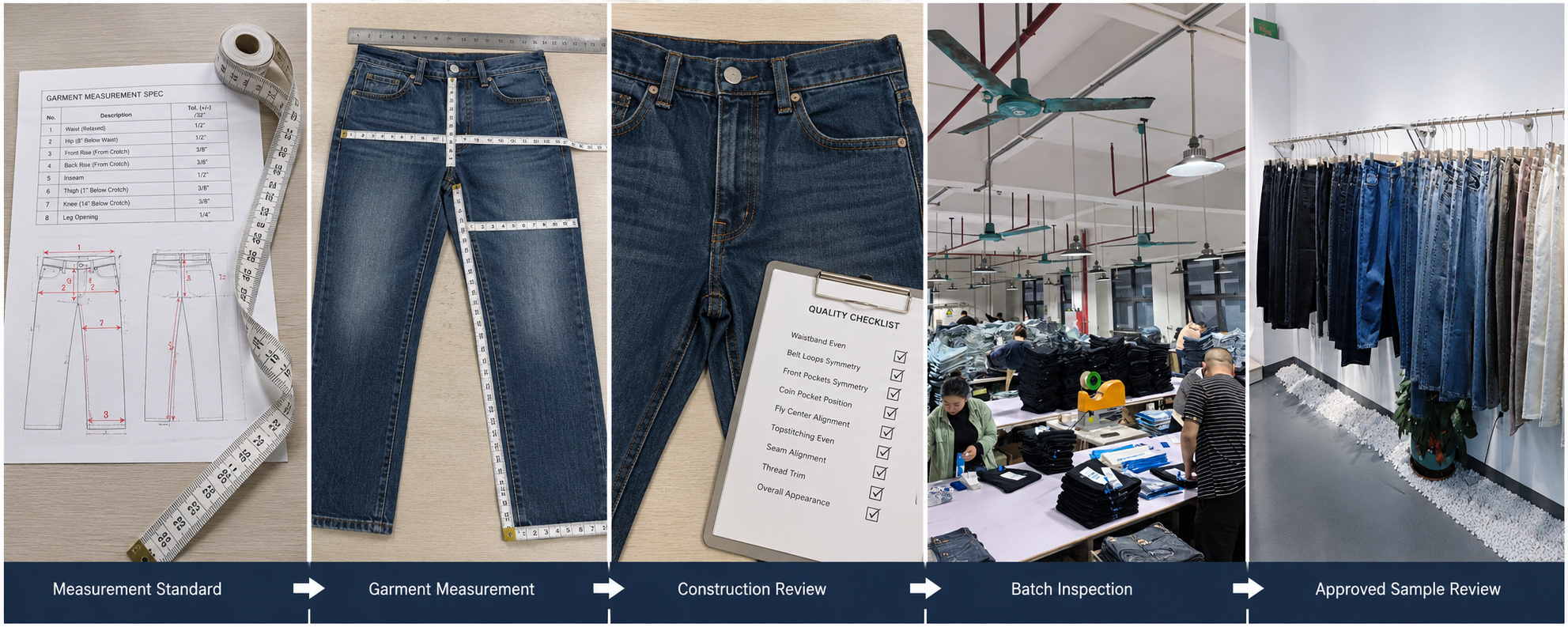
Measurements are checked according to the buyer-approved size specification. Typical points for jeans may include waist, hip, front rise, back rise, thigh, knee, inseam, outseam and leg opening.
The garment should be positioned and measured consistently because different measuring methods can produce different results. The size chart should therefore define measurement points, garment condition and acceptable tolerance.
For washed denim, final measurements are affected by the approved fabric, pattern and wash process. Pre-wash and post-wash comparisons may be used when shrinkage control is important. Measurement results are evaluated against the confirmed fit, size and pattern specification.
Sewing and Construction Inspection
Construction inspection focuses on whether bulk garments follow the approved sample and workmanship requirements. Review points may include:
- Pocket shape, position and symmetry
- Waistband, fly and yoke construction
- Inseam and outseam alignment
- Stitch formation and seam appearance
- Belt-loop position and reinforcement
- Hem construction and leg balance
- Loose threads, skipped stitches or puckering
- Left-to-right garment symmetry
In-line checks during sewing and garment construction help identify repeated issues before garments proceed to washing. Final inspection then confirms the condition of the completed garment.
Wash, Shade and Surface Review
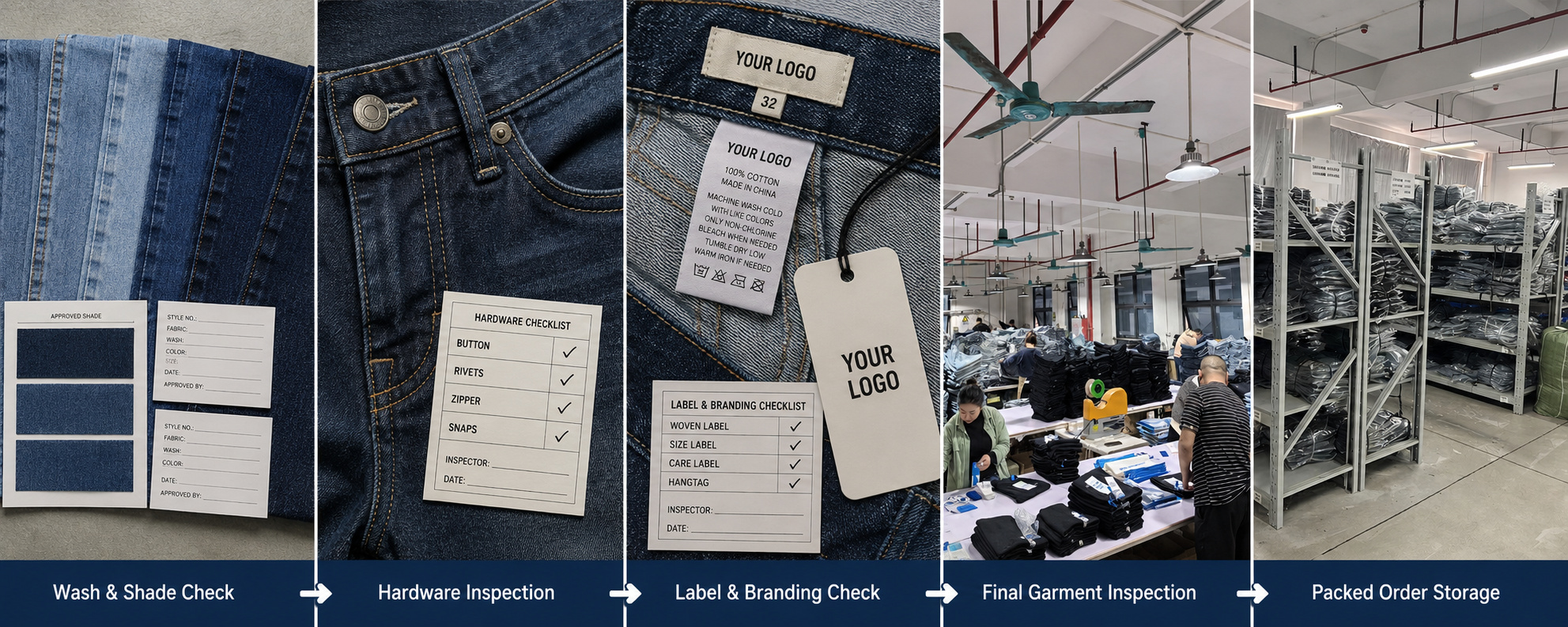
The wash appearance is compared with the approved sample or confirmed wash reference. Checks cover overall shade, contrast, fading, local effects, hand feel and visible surface condition.
Inspectors also look for unwanted stains, excessive abrasion, holes, twisting, uneven fading or damage caused during processing. Denim can have natural shade variation, so the acceptable range should be established before production rather than decided only at final inspection.
Where an order contains several wash batches, batch identification helps manage shade sorting and compare garments with the approved denim washing and finishing standard.
Hardware, Labels and Branding Checks
Buttons, rivets, zippers, buckles, embroidery, patches and labels are checked against the approved trim specification. Inspection points include correct component, finish, color, logo direction, placement and visible damage.
Hardware attachment and functional areas should be reviewed according to the garment design. Embroidery is checked for shape, thread coverage, alignment and puckering. Woven labels, care labels and size labels must be correctly positioned and correspond with the garment size.
 Final Inspection and Packing Verification
Before packing, finished garments are reviewed for overall appearance, measurements, construction, trims, cleanliness and order completeness. The inspection quantity or method can be discussed according to the buyer’s requirements.
Packing checks confirm size assortment, folding method, labels, poly bags, carton quantities and shipping marks. Final packing should follow the approved packing and export shipment instructions.
Buyer-appointed or third-party inspection can be coordinated when requested. The inspection standard, timing and required documents should be communicated early enough to avoid delaying shipment.
Information Buyers Should Provide
For a clear quality plan, provide the approved sample, final measurement chart, tolerances, wash reference, trim approvals, label files and packing instructions.
If specific testing is required for fabric composition, colorfastness or shrinkage, state the test method and acceptance criteria before production. Clear requirements allow the factory to plan checks around the actual order specification and prepare the bulk garments for inspection before shipment.