
 Custom Denim Development for B2B Orders
Velden Denim develops jeans and other denim garments for fashion brands, importers, wholesalers, retailers and private label programs. Custom projects can begin from a tech pack, reference garment, product image or a clearly defined set of measurements and construction requirements.
Our current production range focuses on straight jeans, denim shorts, denim overalls and flare jeans. Depending on the product, buyers can adjust the fabric, stretch, fit, size range, wash, color, hardware, branding and packaging.
Customized orders usually start from around 100 pieces per style. The workable MOQ depends on fabric availability, wash requirements, colors, custom trims and garment construction. Reviewing these details before sampling helps us provide a more realistic development route, quotation and production schedule.
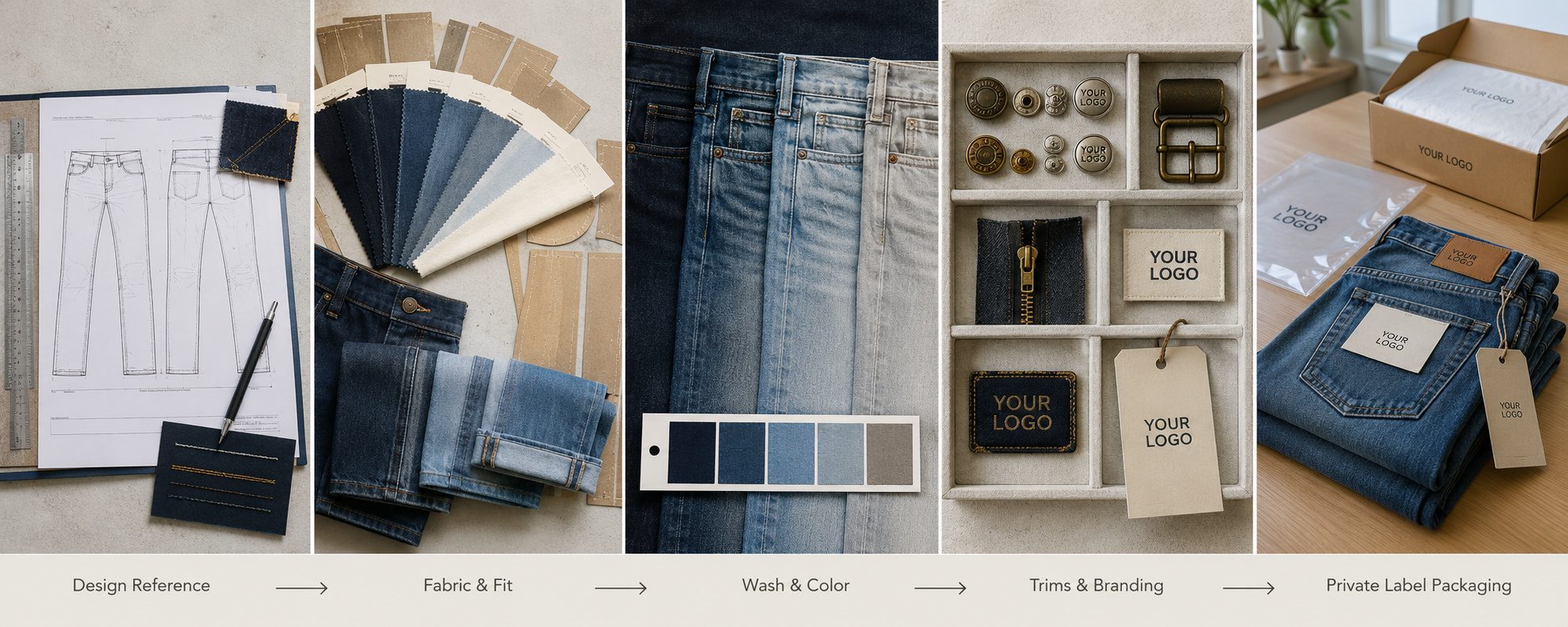
Tech Pack, Drawing and Reference Sample Review
A clear product reference reduces unnecessary sample revisions. Buyers can provide a tech pack with measurements and construction details, send an existing garment sample, or submit product images with written requirements.
During the initial review, we check the garment structure, intended fit, fabric, wash effect, trims, labels, size range and expected order quantity. Missing details are identified before pattern making so that the first sample is based on one consistent specification.
Our Tech Pack & Sample Development page explains how project information is converted into a fit sample and an approved pre-production reference. Typical sample development takes around 7–15 days, depending on the design, material, washing process and trim availability.
Fabric, Material and Color Options
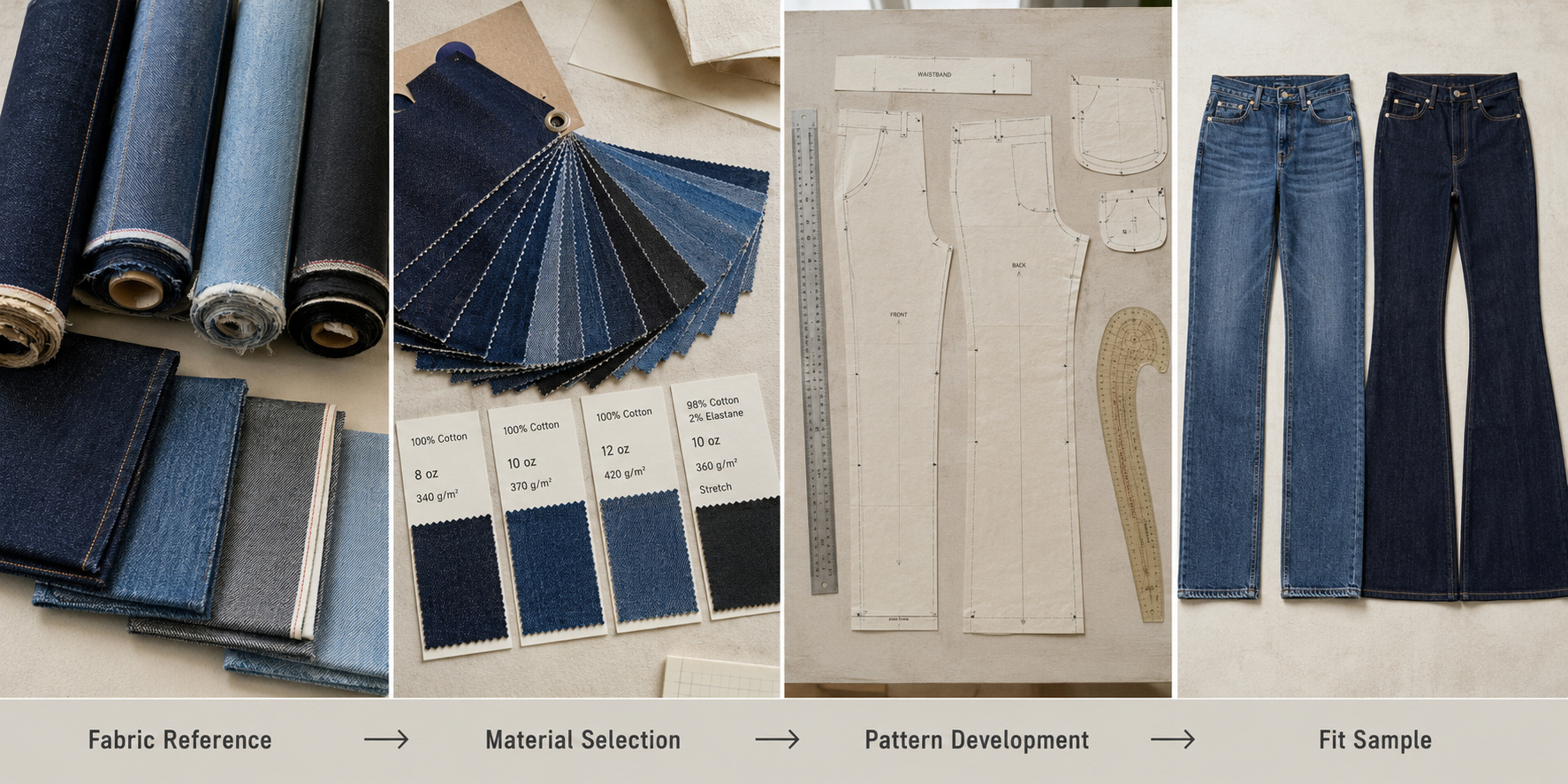
Available materials include cotton denim, stretch denim, cotton-blend denim, recycled denim and buyer-specified fabrics. Selection should consider composition, fabric weight, stretch, recovery, hand feel, target wash and final garment fit—not color alone.
Fabric availability can affect MOQ and lead time. A readily available denim may support a smaller initial order, while a buyer-specified composition, color or specially developed fabric may require a higher material minimum.
Color is normally confirmed together with the denim fabric and washing effect. Indigo depth, black or colored denim, fading and final hand feel should be evaluated on a physical sample before bulk production. Buyers can review the main considerations through our Denim Fabric & Material Options page.
 Fit, Size and Style Customization
Jeans fit is controlled through connected measurements rather than a general size label. Rise, waist, hip, thigh, knee, inseam and leg opening must be developed around the intended silhouette and the fabric’s behavior after washing.
For straight jeans, the main considerations include leg profile, thigh allowance and leg opening. Flare jeans require additional control over the knee position and flare width. Denim shorts involve length, rise, hem and leg opening, while overalls require confirmation of the bib, straps, buckles, pockets and side construction.
Patterns and size specifications are reviewed through sampling. Any agreed revisions should be completed before the pre-production sample is approved. More details are available on our Fit, Size & Pattern Development page.
Wash, Finishing and Bulk Appearance Approval
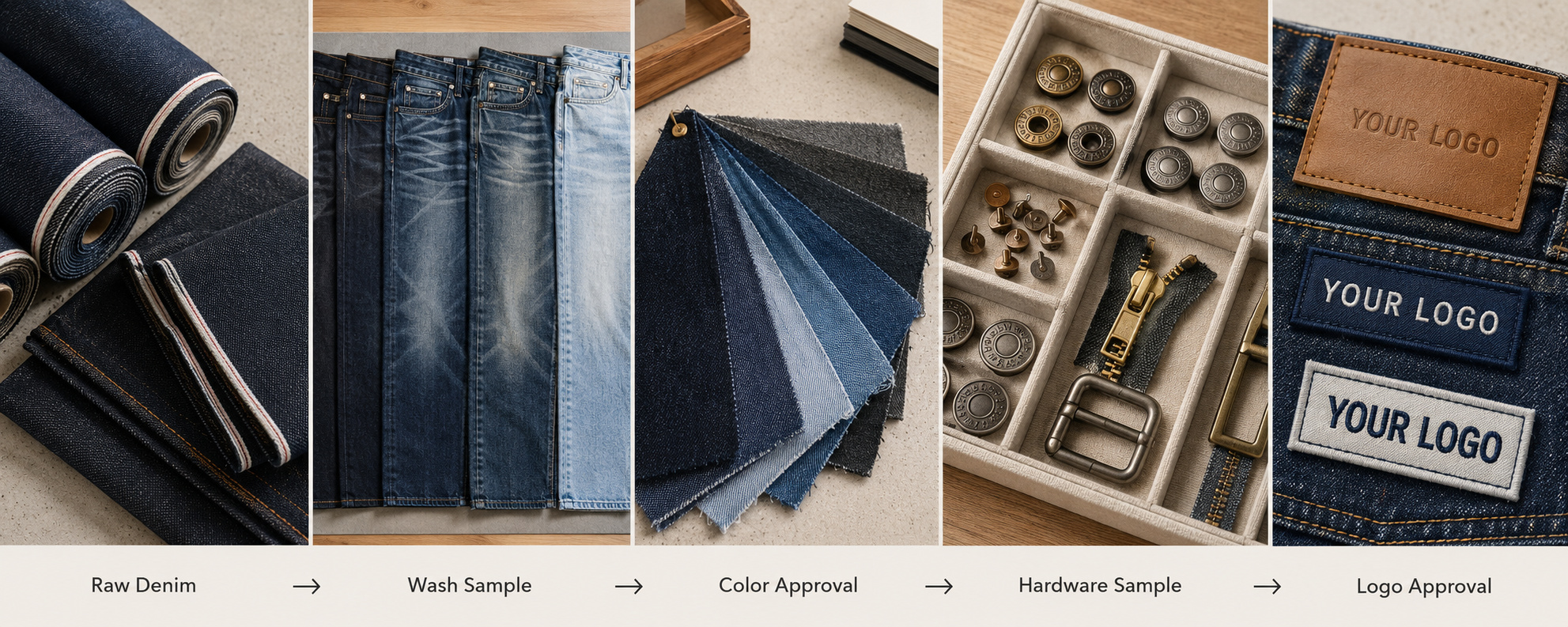
Washing changes the color, hand feel and dimensions of a denim garment. Buyers should provide a physical wash reference, approved image or clear description of the target appearance whenever possible.
Sample review covers color depth, fading, surface effect, garment feel and post-wash measurements. The approved sample then becomes an important production reference. Bulk garments are checked against the confirmed wash appearance and order specification, although reasonable variation should be considered for wash-dependent effects.
Wash complexity may influence sample time, MOQ, unit cost and production scheduling. Any special finishing requirement should therefore be discussed before the fabric and sample route are finalized.
 Trims, Logo and Private Label Details
Brand customization may include buttons, rivets, buckles, embroidery, accessories, woven labels and hangtags. The available options depend on the garment structure, order quantity and artwork requirements.
Buyers should provide the logo file, required dimensions, color references and intended positions. Custom metal hardware may involve separate tooling or supplier minimums, while standard hardware with customized labels may offer a more practical route for smaller programs.
Artwork, materials, colors and positions should be approved before bulk production. The same confirmed details are used during final inspection to check branding consistency.
Custom Packaging for Denim Orders
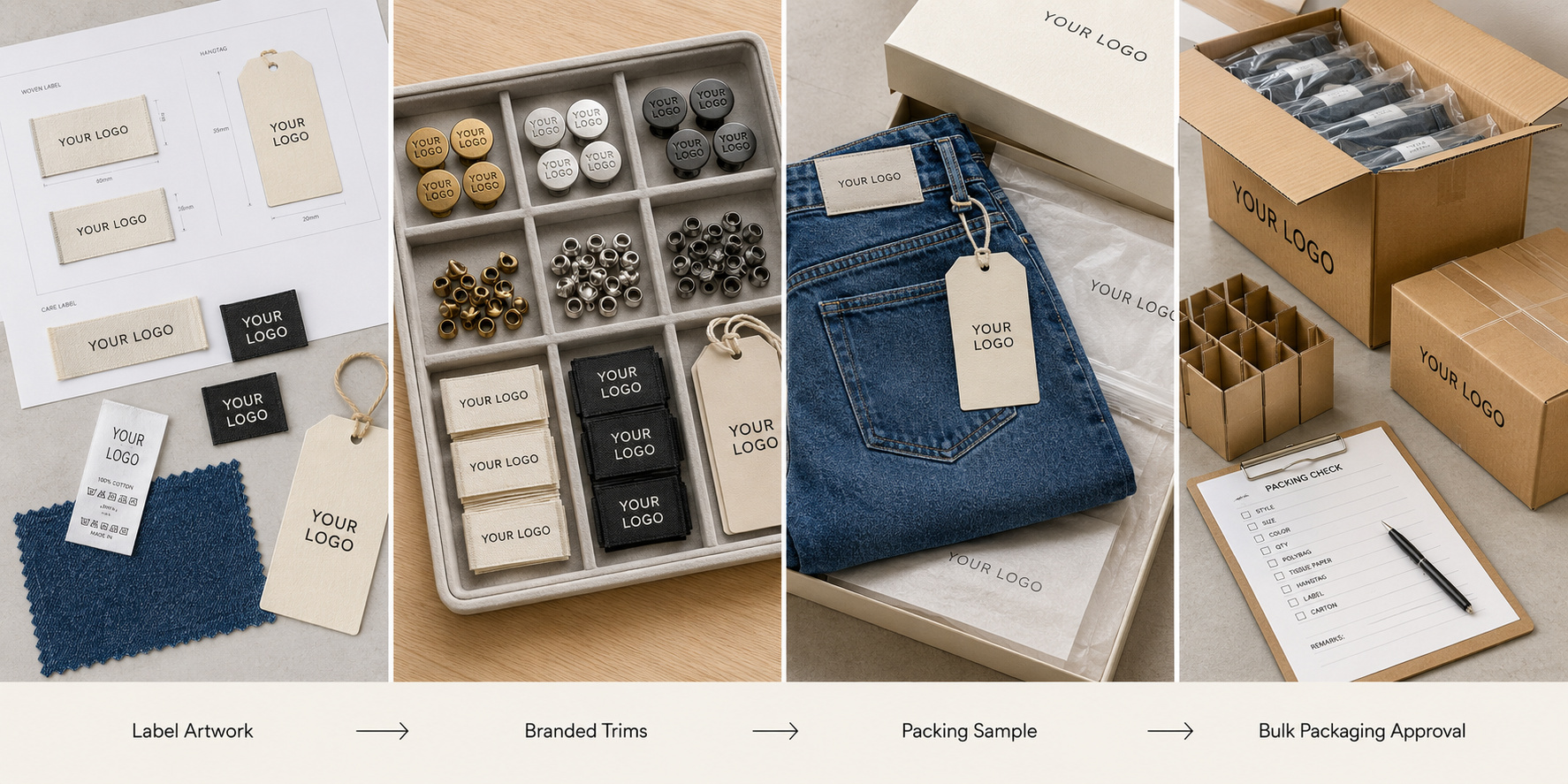
Private label packaging can include woven labels, hangtags, individual poly bags, cartons and retail packaging based on the confirmed order specification. Buyers should provide artwork, packing quantity, size and color assortment, label placement and shipping mark requirements where applicable.
Packaging should be reviewed together with the destination, distribution method and trade term. A wholesale carton program may require simple protective packing, while a retail or e-commerce order may need additional labels and individual presentation requirements. Our Private Label & Packaging page covers the available confirmation and packing process.
 From Sample Approval to Bulk Production
Bulk production normally begins after the product specification, fabric, fit, wash, trims, labels, packaging, MOQ and delivery plan have been confirmed. The approved sample provides the main reference for cutting, sewing, finishing, measurement and final inspection.
Typical bulk production takes around 30–60 days, depending on quantity, material availability, washing requirements and production scheduling. Finished garments are checked for construction, measurements, wash appearance, hardware, branding and packing before shipment preparation.
For an initial evaluation, send your style or tech pack, quantity per style and color, size range, fabric and wash requirements, branding details, packaging needs, destination and preferred trade term. We can then assess the workable MOQ, sample route, lead time and quotation.