
 Factory-Based Denim Garment Production
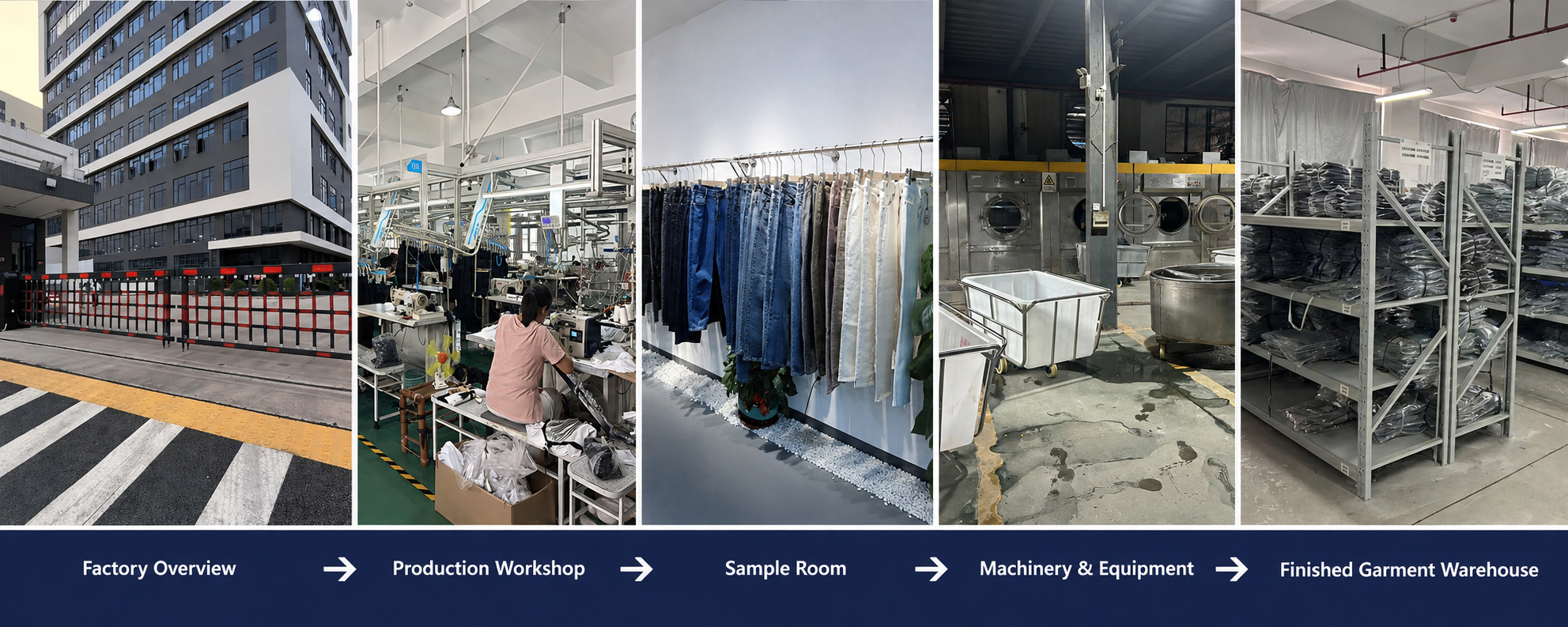
Velden Denim is a factory-based denim garment manufacturer located in Panyu District, Guangzhou, China. Established in 2011, our approximately 8,200㎡ facility supports sampling, cutting, sewing, inspection and packing for OEM and private label denim orders.
Around 150 workers and staff support order development and production across approximately five denim lines. Monthly capacity is around 80,000–120,000 pieces, depending on the style, construction, washing requirements, order quantity and production schedule.
Our core production range includes straight jeans, denim shorts, denim overalls and flare jeans. Manufacturing begins only after the main product specification, fabric, measurements, wash, trims, branding, MOQ and delivery requirements have been reviewed.
Production Preparation and Approved References
Before bulk production, the production team works from the confirmed tech pack, measurement chart, approved sample and order specification. These references define the garment structure, fabric, size range, wash appearance, trims, labels and packaging.
Pre-production preparation normally includes:
- Reviewing the approved sample
- Confirming fabric and wash requirements
- Checking the final pattern and size specifications
- Confirming buttons, rivets, labels and accessories
- Preparing size and color quantities
- Confirming packaging and delivery requirements
- Planning the production schedule
Incomplete or conflicting specifications can delay material preparation and production. Buyers should therefore complete sample approval before the bulk order is scheduled.
Fabric Inspection and Cutting
Fabric is checked against the confirmed material requirements before cutting. The review focuses on fabric type, color, visible defects and suitability for the approved garment specification.
Fabric spreading and cutting affect panel dimensions, pocket placement, garment balance and material usage. Automatic fabric cutting equipment supports consistent garment panels during bulk production. Cut components are prepared according to the approved pattern and order quantities.
Particular attention is required when the order includes different denim shades, stretch materials or wash-dependent fabrics. These materials should remain correctly identified through cutting and sewing to reduce mixing between production groups.
More information about material preparation is available on our Fabric Inspection & Cutting page.
 Sewing and Garment Construction
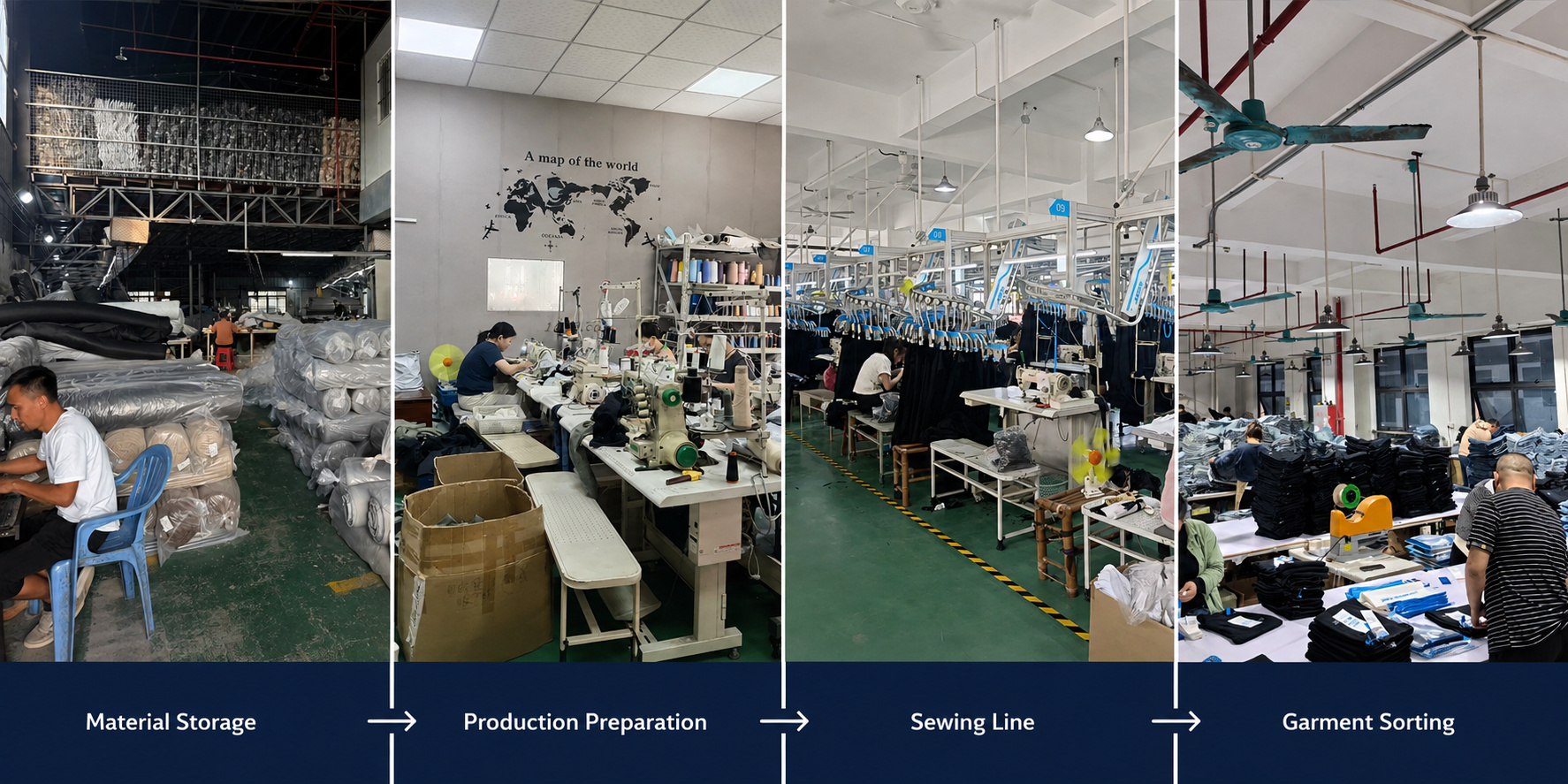
Cut panels move into sewing according to the approved construction details. Computerized sewing, overlock and flatlock machines support garment assembly, while the required operations vary by product.
Straight and flare jeans commonly involve front and back panel joining, pocket attachment, fly construction, zipper installation, waistband assembly, belt loops, inseams, side seams and hems. Denim overalls require additional bib, strap, buckle, pocket and side-button construction.
In-line checks focus on:
- Stitching consistency
- Seam construction
- Pocket position and symmetry
- Fly and zipper assembly
- Waistband shape
- Bartack and reinforcement positions
- Product-specific construction details
Production should not rely on general workmanship standards alone. Each order is checked against the approved sample and confirmed tech pack. The full garment assembly direction is explained on our Sewing & Garment Construction page.
Washing, Hardware and Finishing
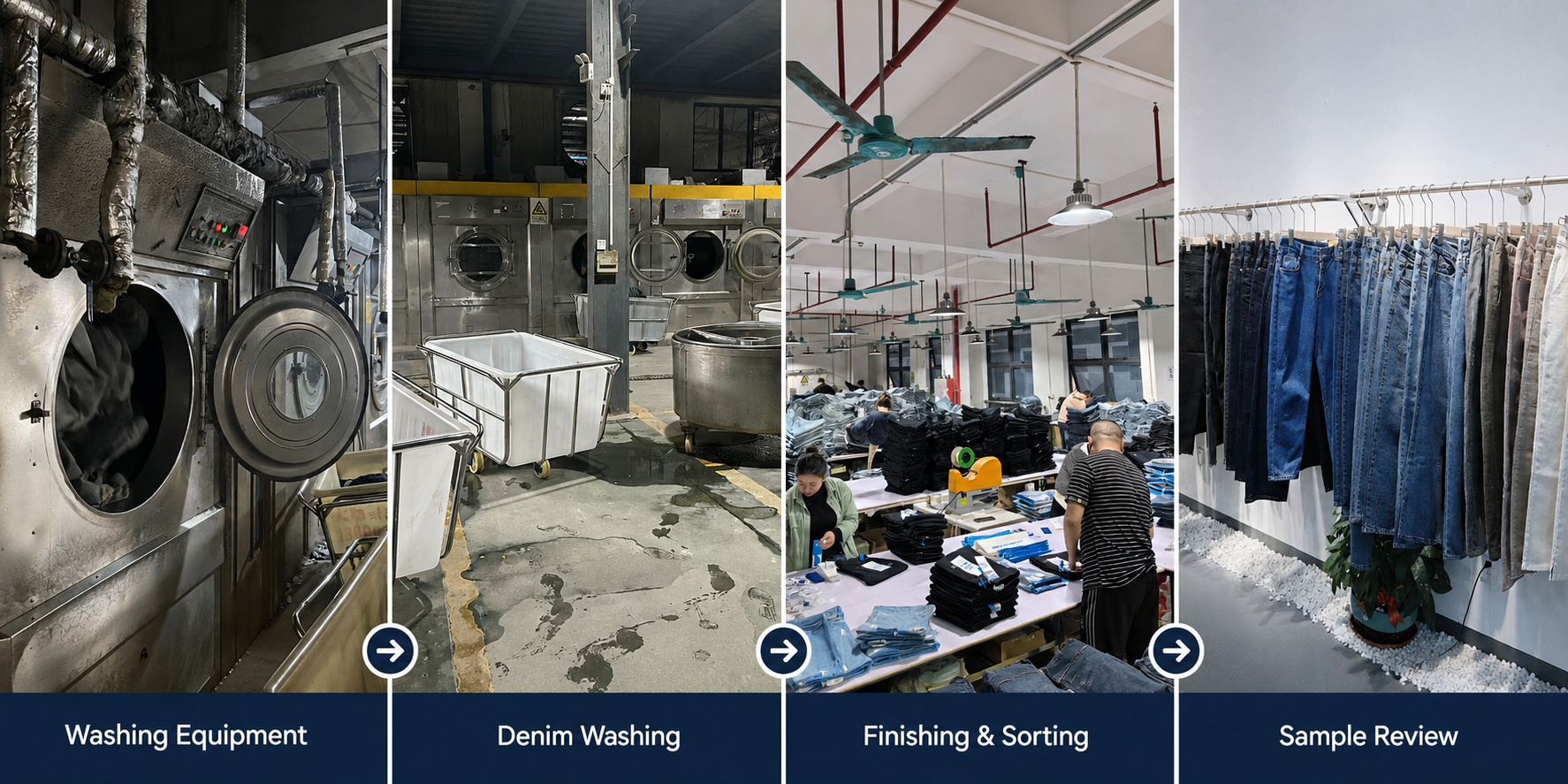
Washing gives denim garments their final shade, hand feel and surface appearance. The required wash is developed and confirmed during sampling before it becomes a reference for bulk production.
Wash coordination may cover raw or rinse finishes, dark and medium washes, faded effects, black or grey shades and other approved directions. The exact feasibility depends on the fabric, order quantity and finishing requirements.
After washing, garments are reviewed for shade, visible effects, seams, measurements and overall appearance. Buttons, rivets, buckles, embroidery and accessories are also checked against the approved sample.
Because the homepage does not establish that every washing process is completed inside the main garment facility, manufacturing content should describe wash development, production coordination and finishing checks accurately rather than presenting all wash equipment as factory-owned.
 Measurement and Quality Inspection
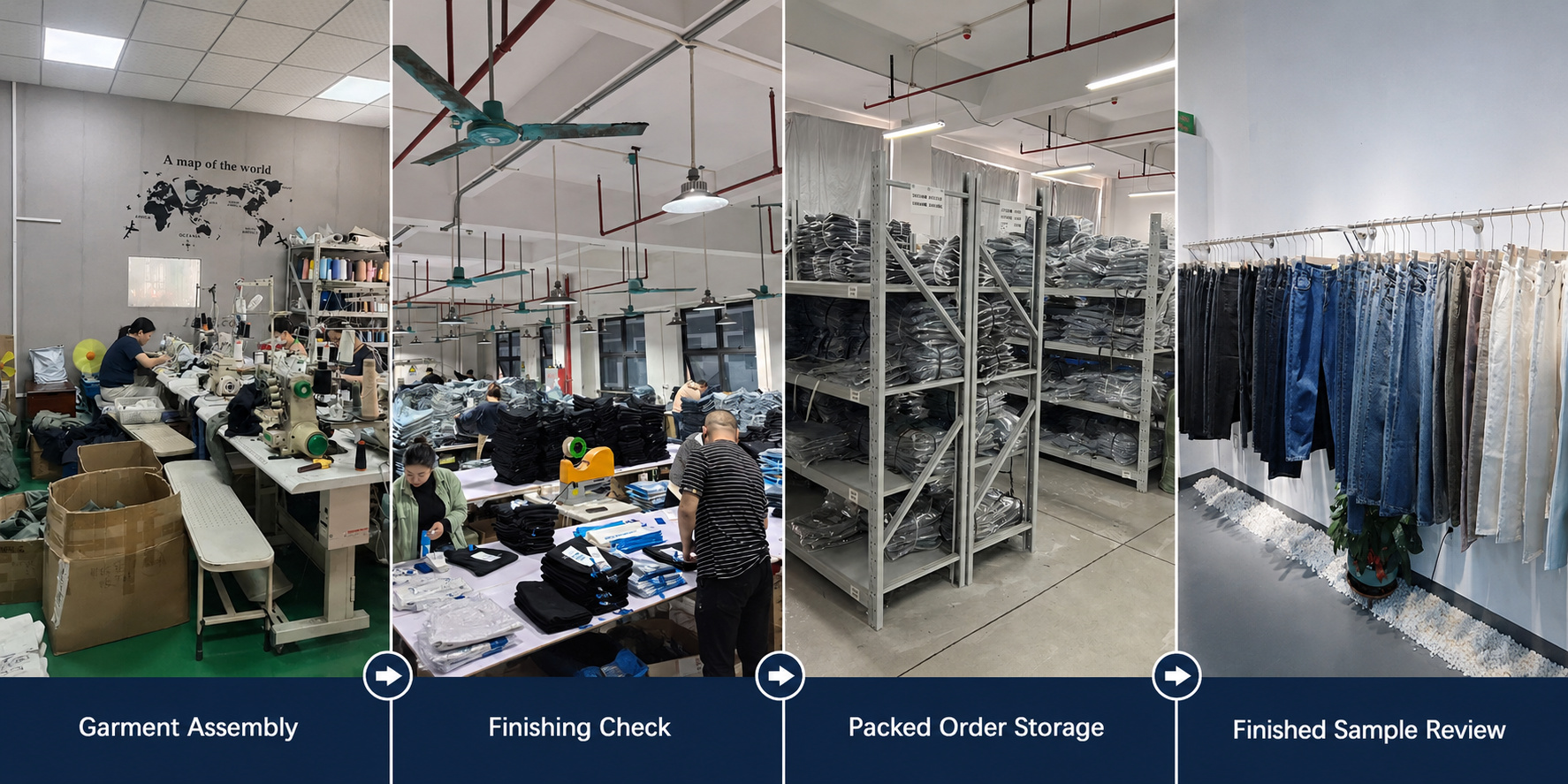
Finished garments are checked against the approved sample, measurement chart and order specification. Inspection is completed through relevant production stages rather than relying only on the final packed product.
Key checks may include:
- Garment measurements
- Stitching and seam quality
- Pocket and waistband construction
- Wash shade and appearance
- Symmetry and leg balance
- Buttons, rivets, zippers and buckles
- Labels and hangtags
- Visible defects
- Packing quantity and assortment
Fabric composition, colorfastness and shrinkage tests can be arranged when required by the buyer. Third-party inspection can also be coordinated according to the order requirements. Detailed checkpoints are covered on our Measurement & Quality Inspection page.
Packing and Export Preparation
Approved garments are folded and packed according to the confirmed specification. Options may include individual poly bags, size stickers, woven labels, hangtags, paper boxes, retail packaging and export cartons.
Before shipment preparation, the packing team checks the garment, size and color assortment, individual packaging, carton quantity, carton condition and shipping marks. EXW, FOB, CIF and DDP terms can be discussed according to the destination and order requirements. Guangzhou Port and Shenzhen Port are the nearest main export options.
 Production Information Needed from Buyers
Customized orders usually start from around 100 pieces per style. Sample development normally takes around 7–15 days, while bulk production usually takes around 30–60 days after the required approvals and material arrangements are completed.
For a production evaluation, buyers should provide the style or tech pack, quantity per style and color, size range, fabric, wash reference, trims, branding, packaging, destination and preferred trade term. These details allow us to assess the workable MOQ, sample route, production schedule and quotation.