
Branding and Functional Details for Denim Orders
Buttons, rivets and embroidery affect both the appearance and construction of jeans, denim shorts and overalls. These details may carry the buyer’s branding, reinforce stress points or create a distinctive finish within a private label collection.
Development begins with the garment design, approved artwork and intended wash effect. Hardware size, finish, attachment and placement must work with the selected fabric and construction. Embroidery must be evaluated for artwork detail, stitch coverage, color and its effect on the denim panel.
For custom programs, these elements should be sampled and approved before ordering bulk trims or applying them to production garments.
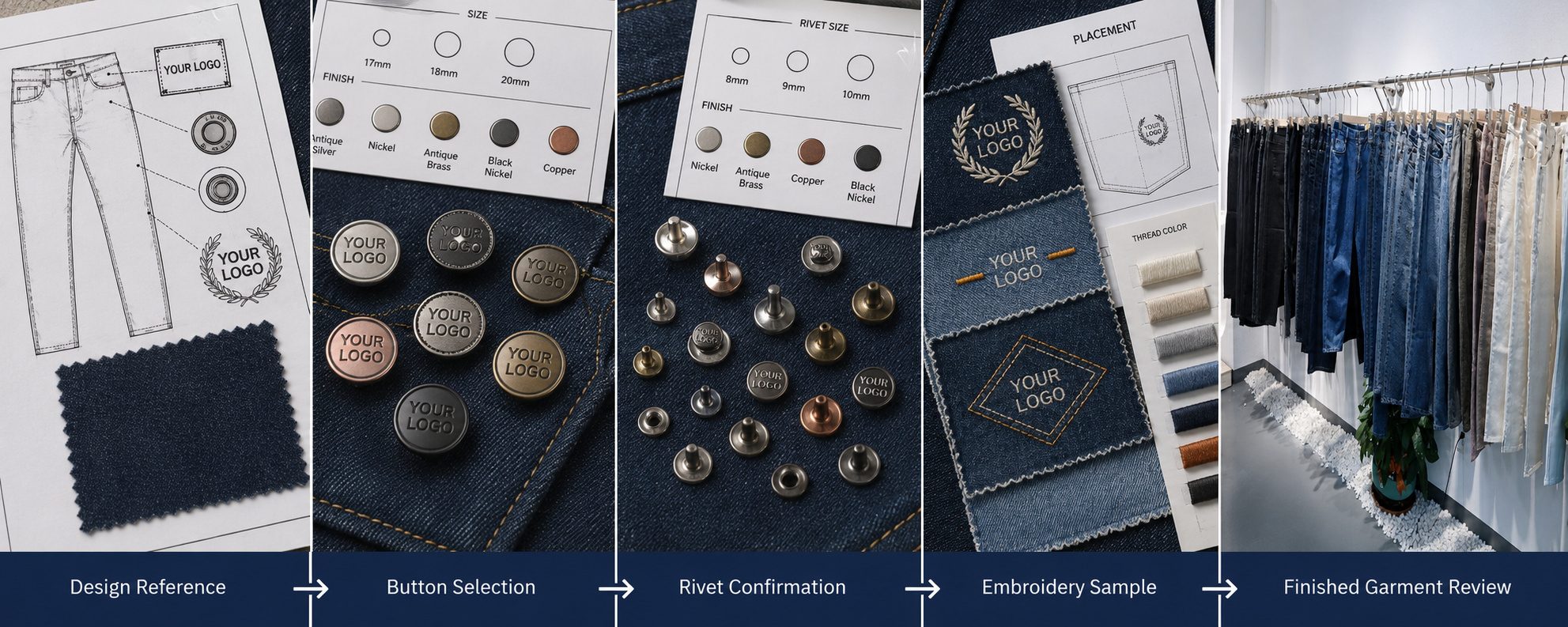 Button and Rivet Options
Jeans buttons and rivets can be developed around the required size, shape, finish and logo artwork. Available options depend on the design, attachment requirement, order quantity and trim supplier’s workable specifications.
Buyers should identify whether the hardware needs a plain finish, debossed or embossed logo, engraved detail or another approved branding effect. Common finish directions may include silver, antique metal, dark metal, brass-tone or buyer-specified colors, subject to sampling and availability.
Buttons and rivets are selected together with other trims, logos and accessories so their appearance remains consistent with zippers, buckles, labels and garment branding.
Artwork and Hardware Sample Approval
Clear vector artwork is preferred for custom hardware. Fine lettering and complex details may need adjustment because a small metal surface cannot reproduce every artwork element clearly.
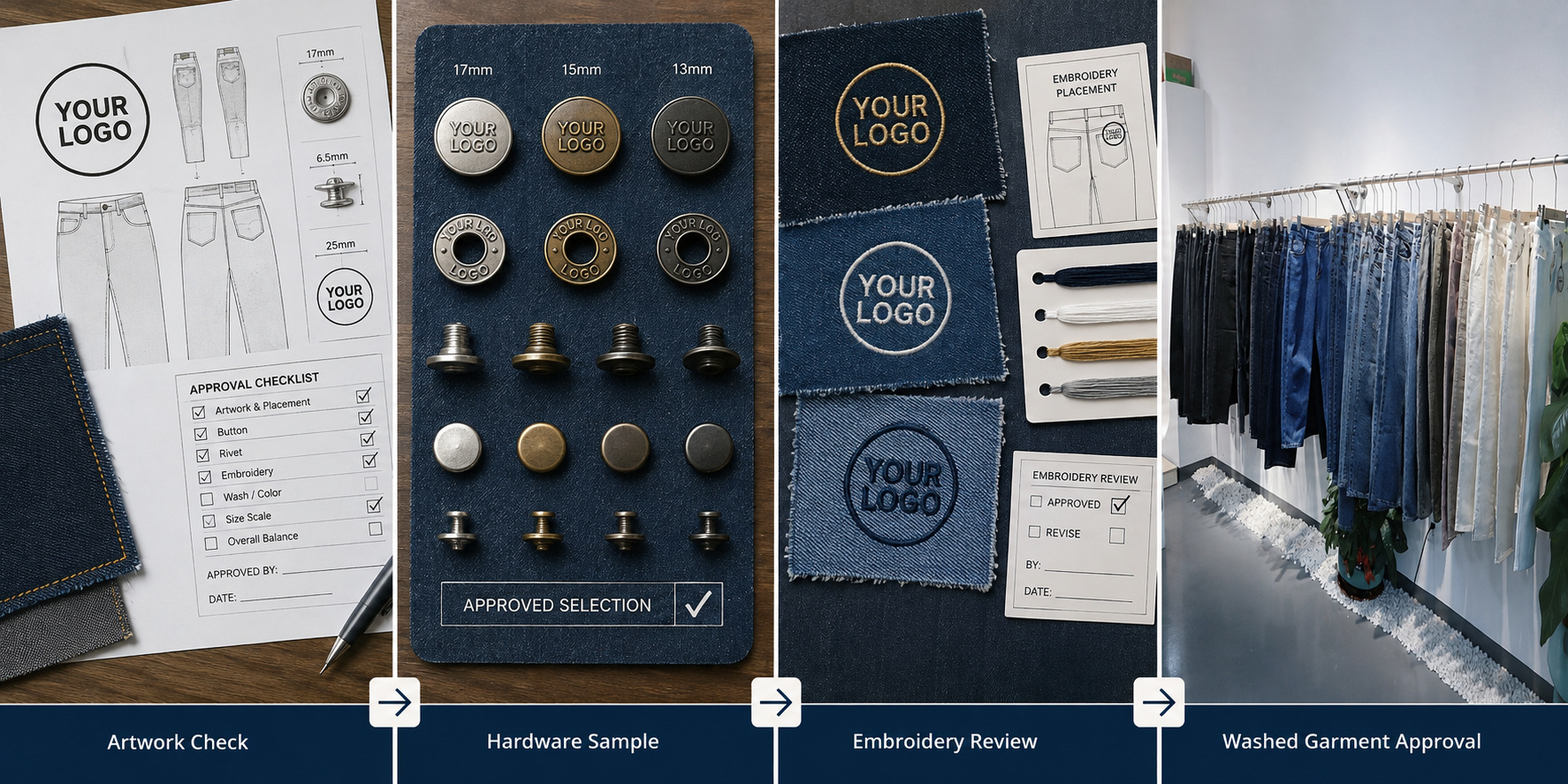
The approval process should confirm:
- Hardware type and application
- Diameter and overall shape
- Logo size, position and direction
- Surface finish and color
- Front and back components
- Placement on the garment
- Required attachment strength
- Appearance after washing
A physical sample or approved trim board is more reliable than approving hardware from a screen image alone. Custom molds, special finishes or low-volume branded hardware may affect MOQ, development cost and lead time.
Embroidery Development on Denim
Embroidery can be used for pocket details, small logos, decorative artwork or other buyer-approved positions. The result depends on artwork size, stitch density, thread color, denim weight and the stability of the embroidered area.
Before sampling, buyers should provide vector artwork, dimensions, color references and exact placement. The embroidery sample is checked for shape, edge definition, thread coverage, puckering and alignment with nearby seams or pockets.
Embroidery should be planned before sewing and garment construction when the design must be applied to an individual panel. Late artwork changes can require new panels, new samples or changes to the production schedule.
Wash Compatibility and Pre-Production Confirmation
Hardware and embroidery may change in appearance after denim washing. Metal finishes can look different against a lighter wash, while embroidery thread and surrounding fabric may react differently during processing.
Where wash performance is important, the trim or embroidery should be reviewed on a washed garment sample rather than only as a separate component. The approved sample should confirm logo appearance, placement, finish, attachment and surrounding fabric condition.
The selected trims must remain aligned with the approved denim washing and finishing standard before bulk production begins.
 Bulk Application and Inspection
During production, buttons, rivets and embroidery are checked against the approved sample and trim specification. Inspection points include correct component, finish, logo direction, placement, attachment, embroidery appearance and visible damage.
Finished garments are also reviewed after washing. Loose hardware, scratched finishes, distorted embroidery, puckering and incorrect placement should be identified before packing.
Final checks can be coordinated with measurement and quality inspection according to the buyer’s order requirements.
Information Needed for a Quotation
Send the garment style, order quantity, target hardware or embroidery reference, artwork file, dimensions, colors, placement and required wash. State whether you need plain trims, custom-logo hardware or buyer-specific embroidery.
These details help evaluate the suitable sample route, trim MOQ, setup cost and production lead time. Bulk materials should only be released after the artwork, physical sample and garment application have been approved.