
Packing Denim Garments to the Approved Specification
Packing must protect finished denim garments while keeping sizes, colors and carton quantities easy to verify. For OEM jeans, denim shorts, overalls and flare jeans, packing requirements should be confirmed before bulk production is completed.
The final packing method may include folding instructions, size stickers, individual poly bags, branded packaging, carton assortment and shipping marks. Requirements vary between fashion brands, wholesalers, importers, retailers and e-commerce programs.
A packing sample or clear packing layout is recommended when the order includes private labels, retail packaging or market-specific labeling.
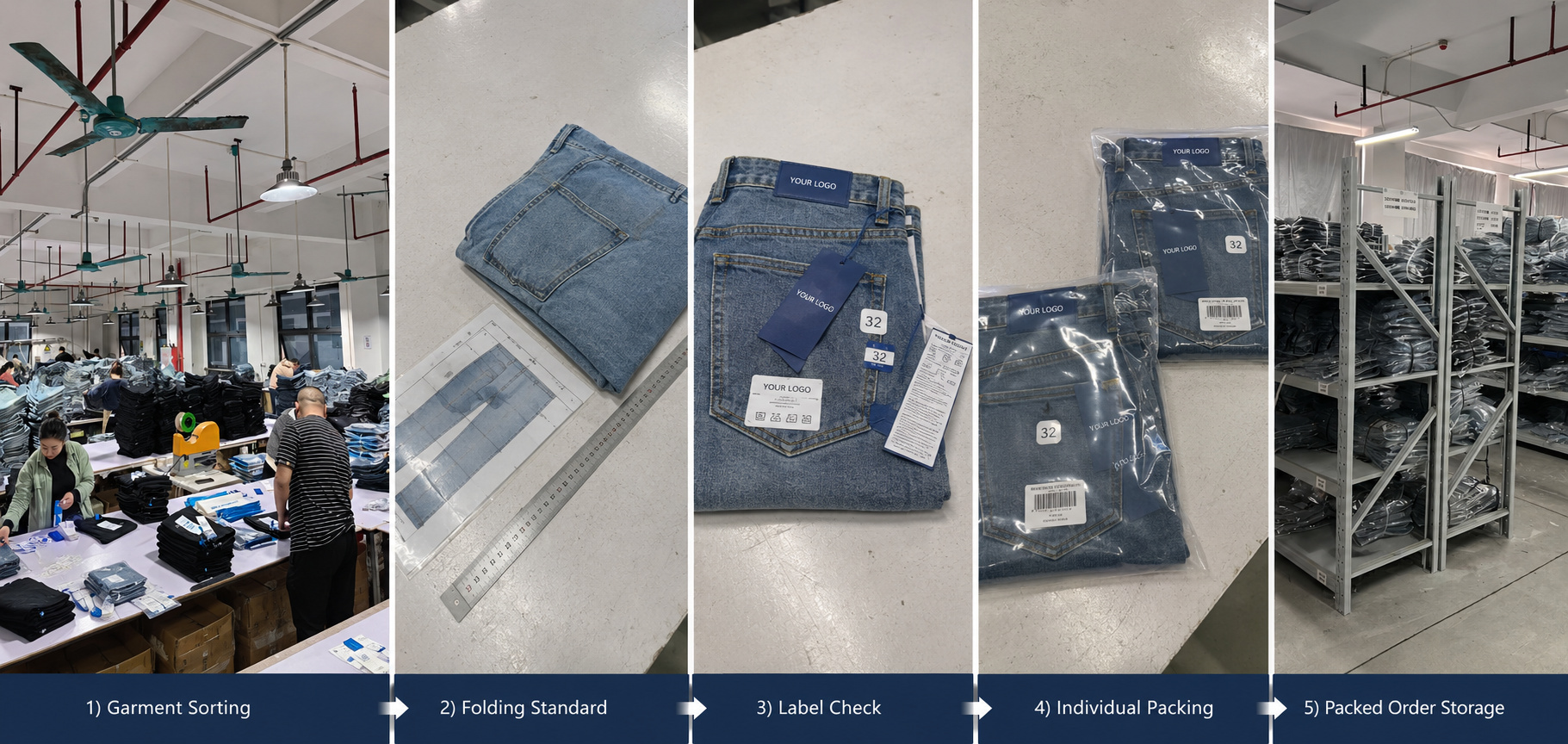 Individual Garment Packing
Finished garments are folded according to the approved method so the product fits the selected packaging and remains presentable after transport. Folding size may need adjustment for heavy denim, overalls or styles with bulky hardware.
Individual packing can include:
- Clear poly bags
- Buyer-specified branded bags
- Size and color stickers
- Barcode or SKU labels
- Hang tags and price tags
- Tissue paper or insert cards
- Retail boxes where required
Artwork, dimensions, material and placement should be approved before bulk packaging is ordered. Buyers requiring woven labels, hang tags or custom packaging should confirm these items through the private label and packaging process.
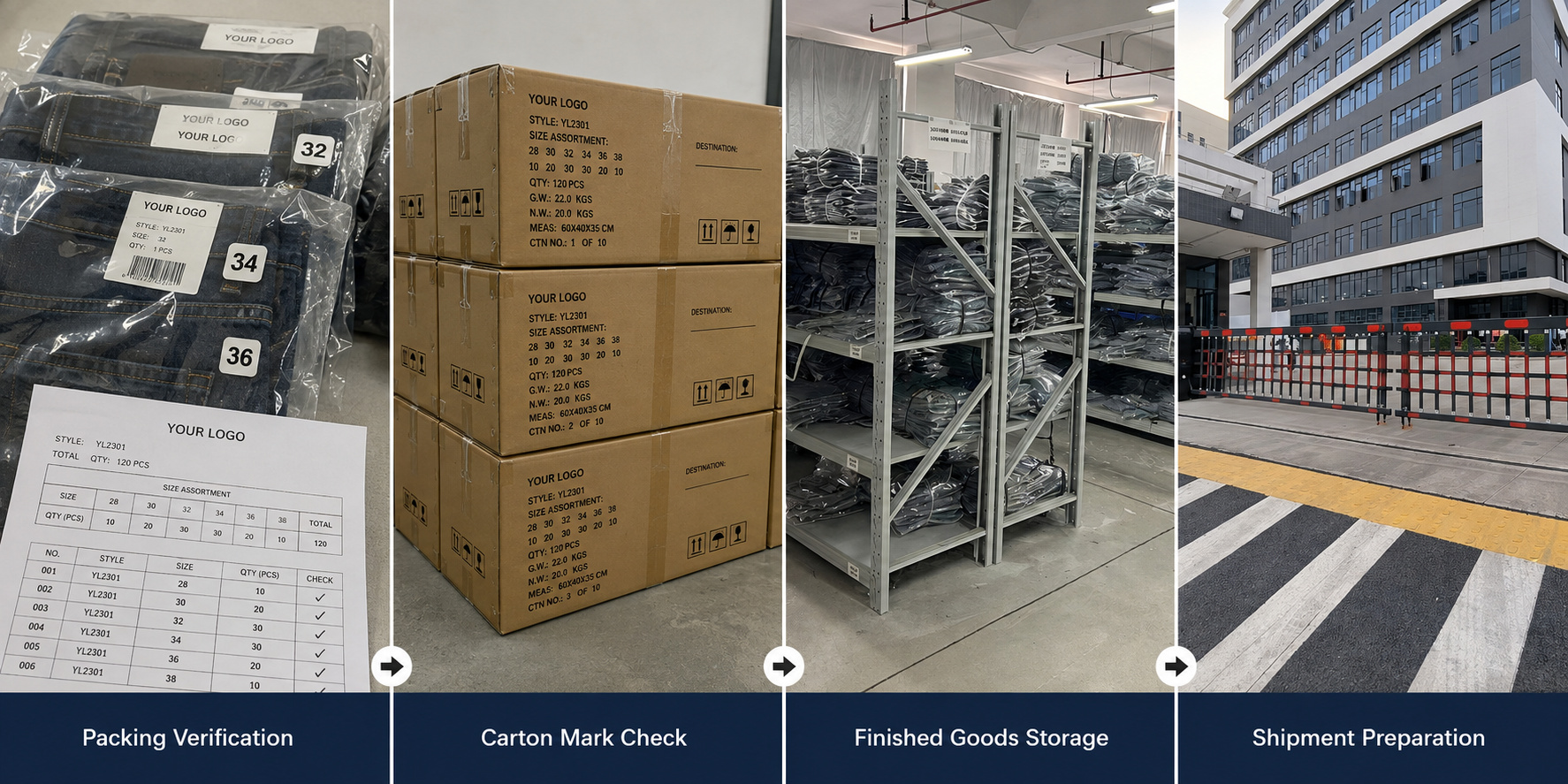
Size Assortment and Carton Packing
Garments can be packed by one size per carton or in an agreed size assortment. The required method should be included in the purchase order and packing instructions.
Before cartons are sealed, checks cover style, color, size, quantity and individual packaging. Carton quantities should match the approved assortment so the buyer can receive and distribute the order accurately.
Carton size and packing quantity depend on garment weight, folding dimensions and the selected packaging. Denim is relatively heavy, so excessive carton weight or unnecessary empty space should be avoided when planning the export pack.
Carton Marks and Order Identification
Shipping marks help identify cartons during storage, freight handling and destination receiving. The buyer should provide the required format before carton printing or marking begins.
Carton information may include:
- Buyer or consignee reference
- Purchase order number
- Style and color
- Size assortment
- Quantity
- Carton number
- Net and gross weight
- Carton dimensions
- Destination or handling marks
Barcode labels, carton stickers and other identification details should follow the buyer’s confirmed data. Incorrect information can delay warehouse receiving even when the garments themselves are correct.
Packing Inspection Before Shipment
Packing is checked after the garments complete measurement and quality inspection. Review points include garment cleanliness, correct labels, approved folding, bag condition, size stickers, carton assortment and shipping marks.
Selected cartons may be opened to verify that the contents match the carton information. The final carton count should correspond with the packing list and confirmed order quantity.
Buyer-appointed or third-party inspection can be coordinated before shipment when required. Inspection timing and packing status should be planned early to avoid delaying the booking.
 Shipment Planning and Trade Terms
Velden Denim can discuss EXW, FOB, CIF and DDP terms according to the destination and order requirements. Guangzhou Port and Shenzhen Port are the nearest main export options stated for shipment planning.
The suitable term depends on whether the buyer will arrange pickup, nominate a forwarder or request freight coordination to the destination. Freight cost cannot be evaluated accurately without the carton quantity, total volume, gross weight, destination and preferred shipping method.
Sea freight is commonly considered for planned bulk orders, while air or courier shipment may be discussed for samples or urgent smaller quantities. The workable method depends on order volume, delivery schedule and cost priorities.
Information Needed Before Packing and Shipping
Buyers should provide the final packing specification, packaging artwork, barcode data, size assortment, carton marks, destination and preferred trade term.
Any destination-specific label, packaging or document requirement should be communicated before bulk packing begins. Changes after garments have been individually packed may require relabeling, repacking and additional time.
For an accurate shipping evaluation, send the order quantity, destination country or port and preferred EXW, FOB, CIF or DDP term. Final freight arrangements can then be discussed after the packed order volume and shipment details are available.