
Developing the Required Denim Appearance
Washing changes the color, hand feel, shrinkage, measurements and overall character of a denim garment. The same raw fabric can produce different results depending on the wash formula, treatment time, garment construction and finishing requirements.
For OEM jeans, denim shorts, overalls and flare jeans, the wash should be developed around a clear buyer reference. This may be a physical garment, wash panel, color standard, product image or approved sample.
Available effects depend on the selected fabric and project requirements. Options may include rinse washes, enzyme effects, stonewashed appearances, faded finishes, vintage looks, black or grey washes and localized abrasion details. Each effect must be evaluated against the fabric composition, stretch and garment construction.
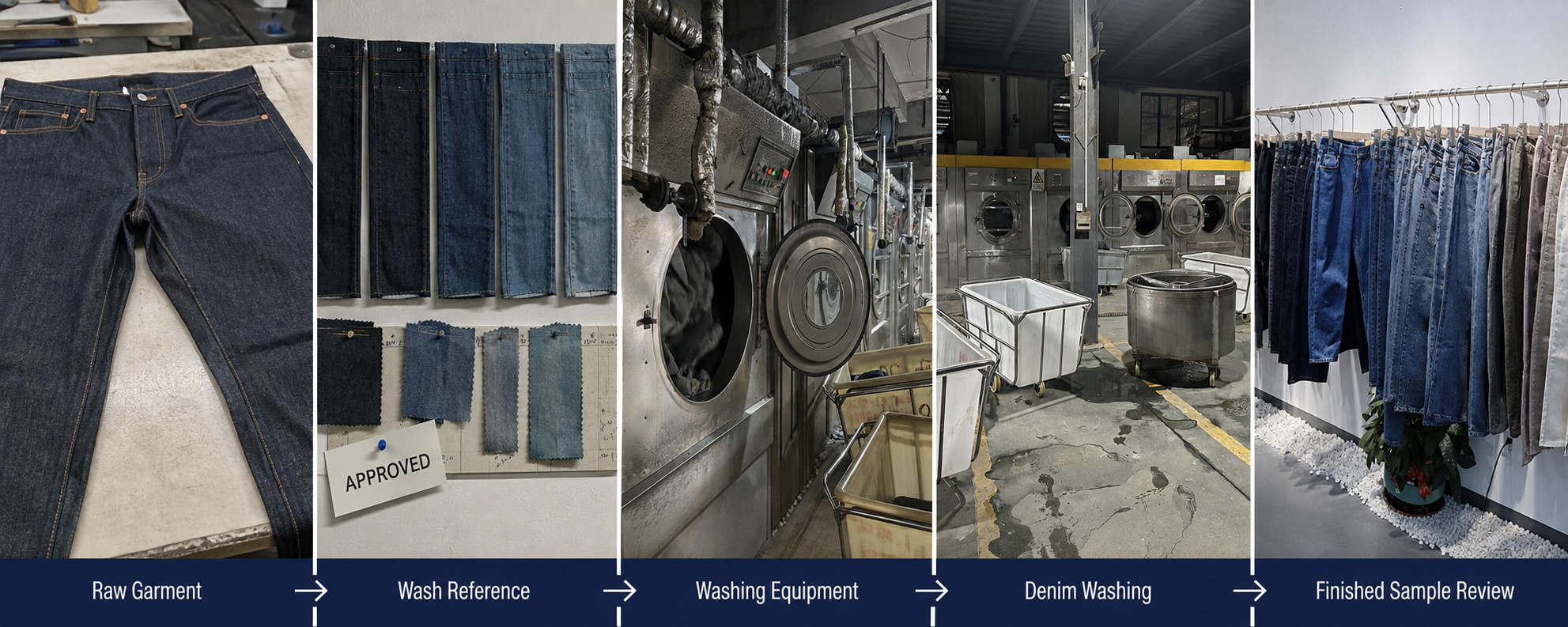 Wash Reference and Sample Development
A photograph can communicate the general look, but it may not accurately show shade, contrast, hand feel or local finishing details. A physical reference sample or approved wash panel provides a more reliable standard for development.
During wash, color and finishing development, the buyer should confirm:
- Target base color and shade depth
- Overall fading and contrast level
- Hand feel and garment softness
- Whiskers, abrasion or localized effects
- Hem, seam and pocket-edge appearance
- Hardware response after washing
- Acceptable shade variation
- Required measurement and shrinkage limits
The wash sample is reviewed before bulk production. If adjustments are required, comments should identify the exact areas to change rather than only requesting a “lighter” or “better” result.
Fabric and Construction Affect the Wash Result
Cotton denim, stretch denim, cotton-blend denim and recycled denim do not react identically during washing. Fabric weight, dyeing method, stretch content and yarn structure can affect fading, shrinkage and surface appearance.
Garment construction also matters. Heavy seams, pocket edges, waistbands and reinforced areas may develop different contrast from the main panels. Stitching, labels, patches, embroidery and hardware must be selected with the intended wash route in mind.
Fabric and wash requirements should therefore be considered together during denim fabric selection. Changing the fabric after wash approval may require a new sample because the previous wash standard may no longer be repeatable.
Bulk Wash Standard and Shade Control
The approved wash sample becomes the main visual reference for production. Bulk garments are compared for overall shade, contrast, local effects, surface condition and finishing appearance.
Denim washing naturally involves some variation. The acceptable range should be defined before bulk processing, particularly for orders requiring close color consistency across several sizes or repeat deliveries.
Production batches should remain identifiable so shade differences can be reviewed and managed during sorting. If a buyer uses an external color standard or approval system, the required reference and checking method should be provided before production.
Measurement and Shrinkage After Washing
Washing can change waist, hip, rise, inseam, leg opening and total length. Patterns may require allowance for the expected shrinkage of the approved fabric and wash combination.
Pre-wash and post-wash measurements help confirm whether the finished garment can meet the approved size specification. Measurement points, tolerances and checking method should be agreed before bulk production.
Finished garments move to measurement and quality inspection after washing and finishing. Any measurement issue should be evaluated together with the pattern, fabric and wash result rather than treated as an isolated sewing problem.
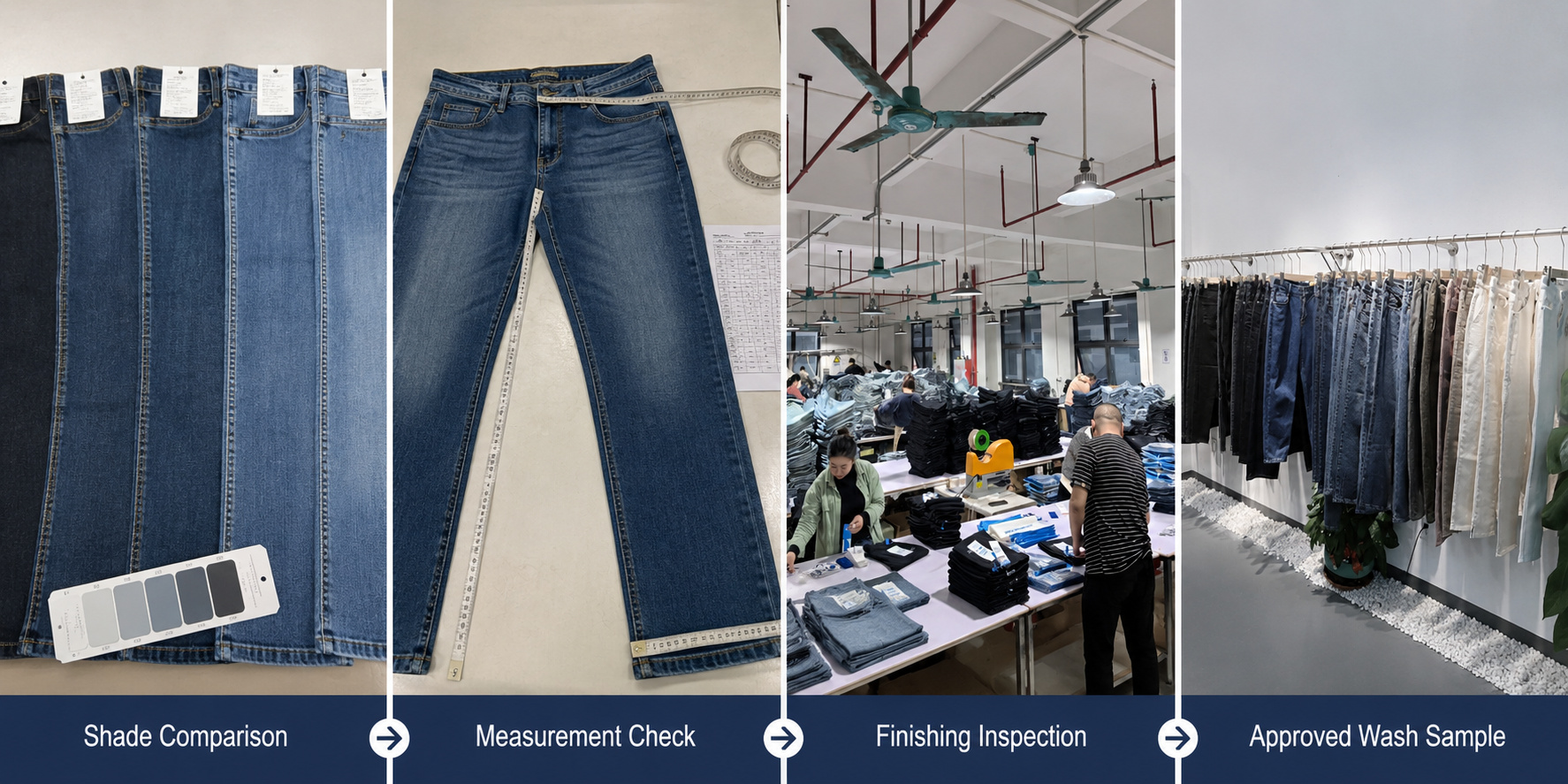 Finishing Checks Before Approval
After washing, garments are reviewed for wash appearance, shade, stains, damage, excessive abrasion, twisting, uneven seams and unwanted marks. Loose threads and finishing details are also handled before final inspection.
Buttons, rivets, embroidery, labels and patches are checked for appearance and security after the wash process. Their coating, color and attachment must remain consistent with the approved hardware and embroidery requirements.
Information Needed for a Wash Quotation
Send the style or tech pack, target fabric, quantity, size range and wash reference. Clearly identify the required base color, fading level, local effects and hand feel. A physical reference sample is recommended when appearance matching is important.
Wash complexity affects sample development, MOQ, production cost and lead time. Approval should cover the garment appearance, shade, measurements, hardware and finishing details before the wash standard is released for the bulk order.