
Turning Approved Cut Panels into Denim Garments
Sewing determines the structure, durability and visual balance of jeans, denim shorts, overalls and other denim garments. Accurate cutting provides the correct components, but the garment will only match the approved sample when seam construction, panel alignment and operation sequence are properly controlled.
Before sewing starts, the production team reviews the approved sample, construction requirements, stitching details, measurements, trims and size allocation. Cut panels are released by style, size and production batch to reduce component mixing.
The sewing arrangement depends on the garment design. Straight jeans, flare jeans, shorts and overalls require different operation sequences, machines and handling methods.
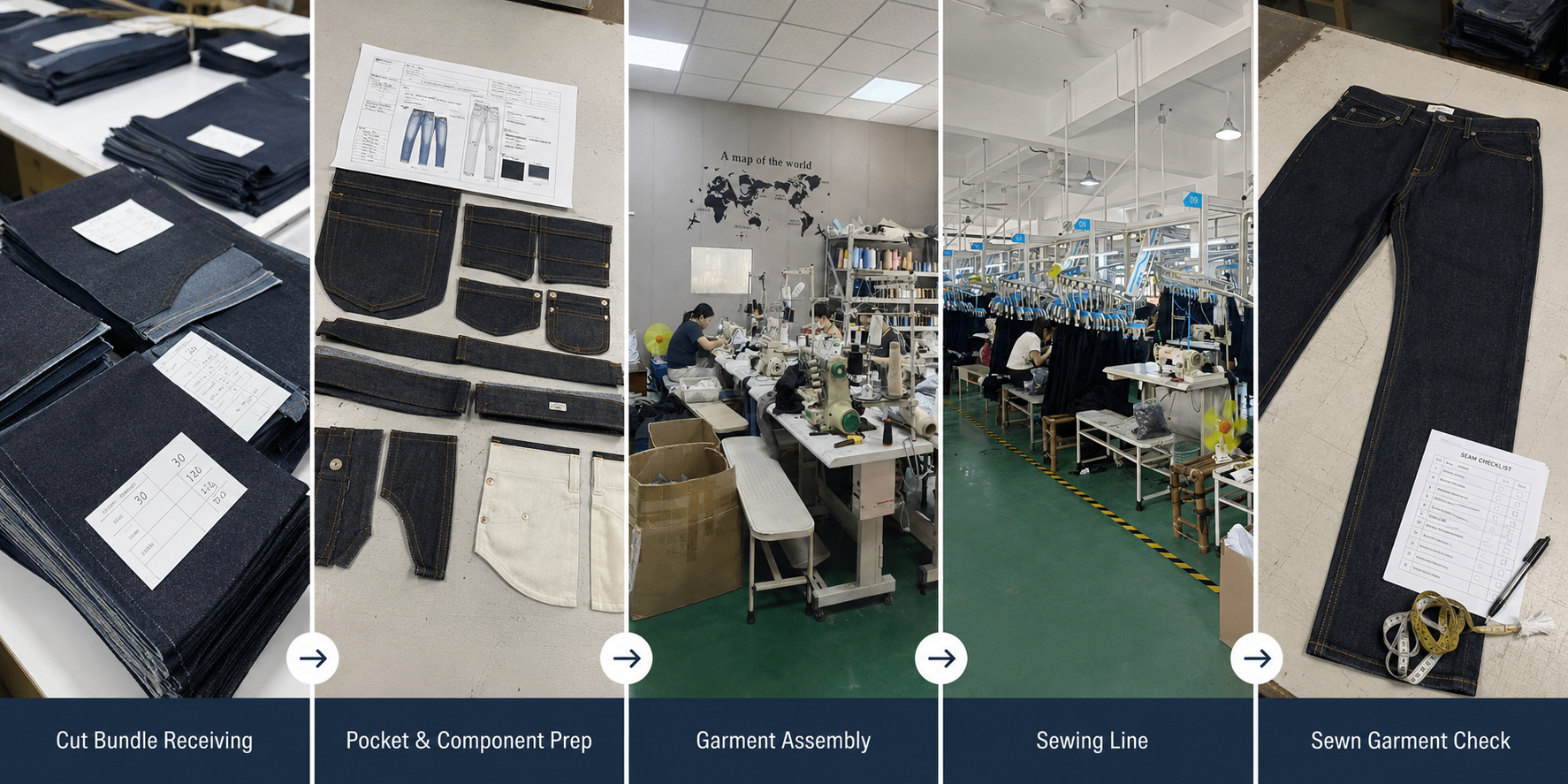 Construction Details Confirmed Before Sewing
The approved tech pack or sample should clearly define the garment structure. Important points include seam type, stitch appearance, pocket shape, pocket placement, waistband construction, belt loops, fly construction, yoke alignment and hem finish.
For styles developed from a buyer’s reference garment, the sample and construction notes are checked together. A physical reference may show the intended appearance, while the tech pack provides the measurements and operation details required for repeatable production.
Any fit or construction revision should be incorporated into the final pattern and size specification before bulk sewing begins. Using an earlier pattern or unclear construction reference can cause differences between the approved sample and production garments.
Main Sewing Operations
Typical jeans construction may include front-pocket preparation, back-pocket attachment, fly assembly, yoke joining, inseam and outseam sewing, waistband attachment, belt-loop setting and hemming. Denim overalls may also require bib assembly, strap construction and reinforced hardware positions.
Computerized sewing, overlock and flatlock equipment support different garment operations. The actual machine and stitch type are selected according to the fabric, seam position and approved construction.
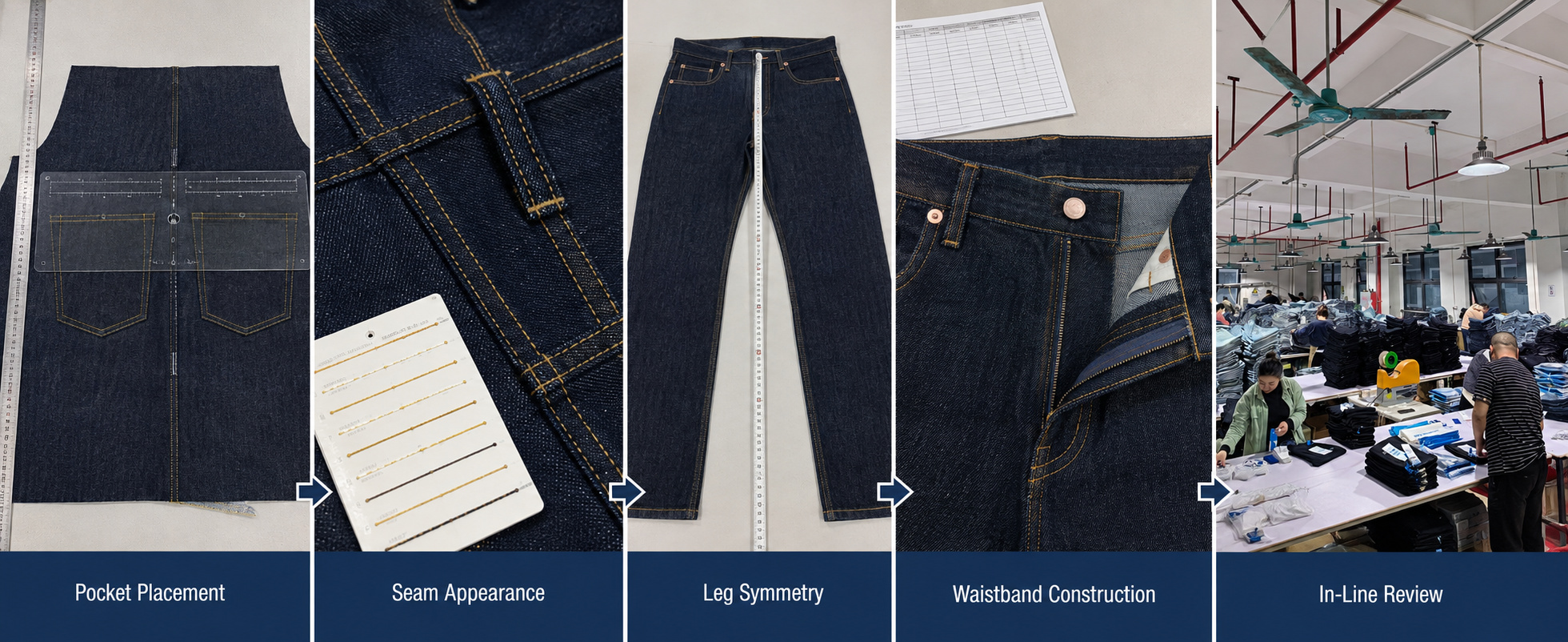
Pocket placement, yoke matching and leg alignment require careful control because small differences can remain visible after washing. Stress points such as pocket openings, belt loops and fly areas may require reinforcement according to the confirmed sample.
In-Line Checks During Garment Assembly
Construction checks should take place while garments are being sewn, not only after the sewing stage is complete. In-line review may cover:
- Correct panels, size and production batch
- Stitch formation, tension and seam appearance
- Seam allowance and panel alignment
- Pocket shape and placement
- Waistband, fly and yoke construction
- Belt-loop position and reinforcement
- Symmetry between the left and right sides
- Visible skipped stitches, puckering or loose threads
Problems found during assembly can be corrected before they continue into washing and finishing. This is especially important for bulk orders because washing can make seam distortion, leg twisting or uneven construction more noticeable.
Managing Trims and Branding During Sewing
Woven labels, size labels and care labels must be positioned according to the approved specification. Embroidery, branded patches and other sewn branding elements should also follow the confirmed artwork, dimensions and placement.
Buttons, rivets and some hardware are normally applied at the appropriate production stage after the relevant garment areas are prepared. Their finish, logo and placement should match the approved trim and accessory specification.
Components should not be substituted during bulk production without buyer confirmation, particularly when a change could affect appearance, function, cost or delivery.
 Preparing Sewn Garments for Washing
Completed garments are reviewed before transfer to denim washing and finishing. Checks focus on garment completeness, sewing defects, loose threads, construction alignment and whether all required components are ready for the selected wash process.
Raw garment measurements may also be recorded where pre-wash and post-wash comparisons are required. This helps evaluate shrinkage and confirm that the final garment can meet the approved measurement specification after washing.
Information Needed for a Construction Review
For an accurate quotation and workable sewing plan, provide the tech pack, reference sample or clear product images together with fabric details, size range, quantity and wash requirements.
Construction details that affect cost include seam types, pocket design, special panels, reinforcement, embroidery, hardware quantity and complex finishing. Velden Denim reviews these points during tech pack and sample development so the approved sample can serve as the production reference for the bulk order.