
Preparing Denim Fabric Before Bulk Cutting
Fabric inspection and cutting establish the foundation for fit, appearance and size consistency in denim garment production. A sewing line cannot correct panels that were cut from the wrong fabric, placed incorrectly or produced from an unconfirmed pattern.
Before cutting begins, we match the bulk fabric against the approved project requirements. The review covers fabric composition, weight, stretch, usable width, color or shade, surface condition and the selected wash route. These details must agree with the approved sample or buyer-confirmed specification.
For OEM jeans, denim shorts, overalls and flare jeans, cutting arrangements are made by style, color, size range and production quantity. Any change to the fabric or pattern after this stage can affect material consumption, cost and delivery time.
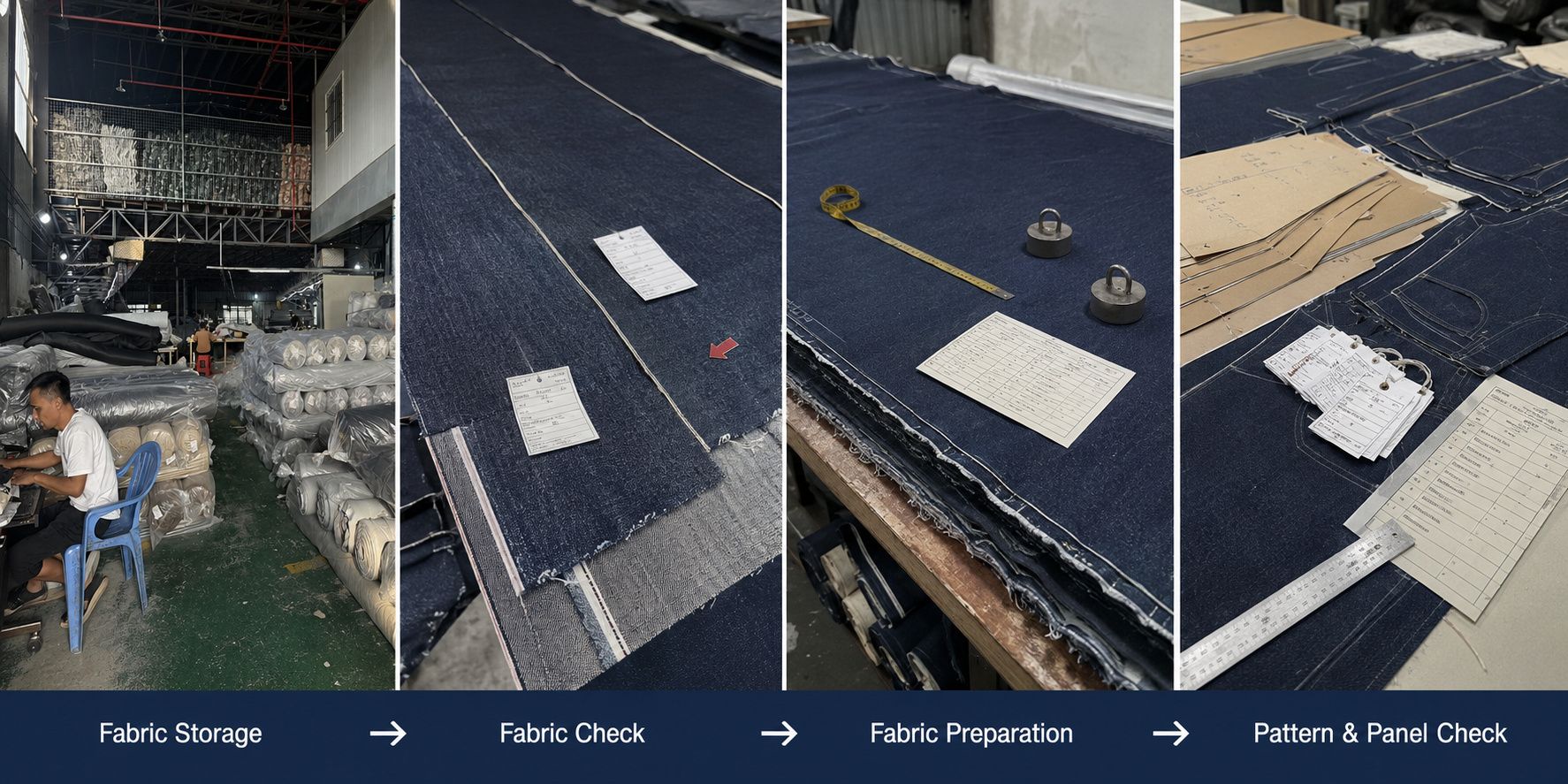 What We Check on Incoming Denim Fabric
The inspection focuses on issues that could remain visible after sewing or become more obvious after washing. Checks may include fabric identity, shade variation, visible weaving defects, stains, holes, width and overall surface condition.
Stretch denim requires particular attention because stretch direction and fabric recovery affect fit. Fabric weight and composition also influence garment structure, wash response and shrinkage. These points should be confirmed during denim fabric selection rather than changed after bulk material has arrived.
When a buyer requires composition, colorfastness or shrinkage testing, the test method and acceptance requirement should be stated before production planning. Testing can be discussed according to the order and destination-market requirements.
Pattern, Grain Direction and Cutting Preparation
The approved pattern provides the cutting reference for each garment component, including front and back panels, waistbands, pockets, yokes and smaller construction pieces. Pattern versions must remain controlled so an earlier revision is not used for bulk cutting.
Marker planning considers the fabric width, grain direction, size ratio and required quantity. Denim panels must be positioned consistently because incorrect grain direction can affect leg twisting, drape and garment balance.
Important details such as seam allowance, pocket placement references and matching points are checked against the confirmed construction specification. Where fit or sizing has been revised during sampling, the final approved pattern and size specification should be released before cutting starts.
Cutting and Cut-Panel Control
Automatic fabric cutting equipment supports consistent panel shapes during bulk production. The cutting method and lay arrangement depend on the denim weight, stretch, style construction and order quantity.
After cutting, panels are kept by style, size and production batch to reduce mixing during sewing. Bundle identification is especially important when an order contains several washes, colors or similar-looking size groups.
Selected cut panels may be checked against the pattern for shape, key dimensions, notches and component completeness. This allows cutting-related problems to be identified before large quantities enter sewing and garment construction.
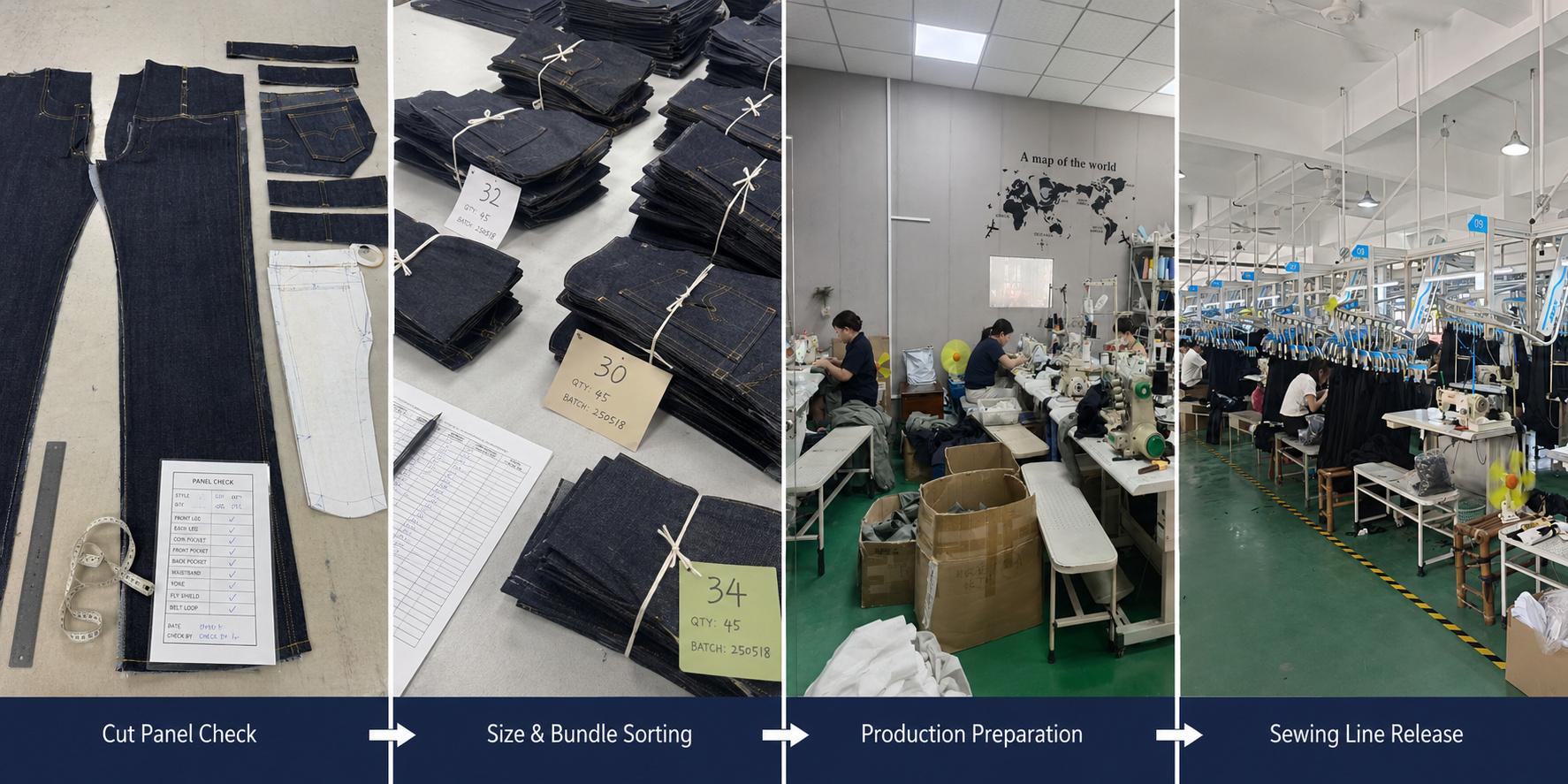 Information Buyers Should Confirm Before Cutting
To prepare an accurate cutting plan, buyers should provide or approve:
- Final style and construction details
- Approved fabric, color and wash reference
- Confirmed measurement chart and size range
- Final pattern or approved fit sample
- Quantity by style, color and size
- Required shrinkage allowance
- Placement details for embroidery or special trims
- Any testing or inspection requirements
If these details remain open, bulk cutting should not be treated as approved. Changes after fabric has been cut may cause material loss, additional sampling, production delays or differences from the approved garment.
From Cut Panels to Sewing Production
Cut bundles are released to sewing according to the confirmed production plan. The sewing team then assembles the garment using the approved sample, construction details and trim requirements as references.
For a quotation, send your tech pack, reference sample or product image together with the quantity, size range, fabric composition, weight, stretch and intended wash. These details help us evaluate fabric usage, workable MOQ, sample requirements and the production schedule before a bulk order begins.