
Developing a Workable Denim Fit
Velden Denim develops patterns and size specifications for straight jeans, denim shorts, denim overalls, flare jeans and other custom denim garments. Development can begin from a tech pack, an authorized reference garment, a measurement chart or a product image supported by clear specifications.
A finished denim fit depends on more than the labeled size. Fabric stretch, garment construction, wash shrinkage and the relationship between individual measurement points all affect the final result. These factors are reviewed before the pattern is prepared and should be confirmed through physical sampling before bulk production.
Measurements Required for Pattern Development
Buyers should provide a point-of-measure chart with the required size, measurement method and acceptable tolerance. Important measurements for jeans commonly include:
- Waist
- Front and back rise
- Hip
- Thigh
- Knee
- Inseam and outseam
- Leg opening
- Waistband width
- Pocket position and size
- Fly and zipper length
The required points change by product. Denim shorts need clear length, rise, hem and leg-opening measurements. Overalls require bib dimensions, strap length, overall length, buckle position and side construction. Flare jeans require particular attention to thigh fit, knee position and flare opening.
If the buyer provides only a reference garment, we can record its construction and measurements as the starting point. Any requested changes should be marked clearly before pattern making.
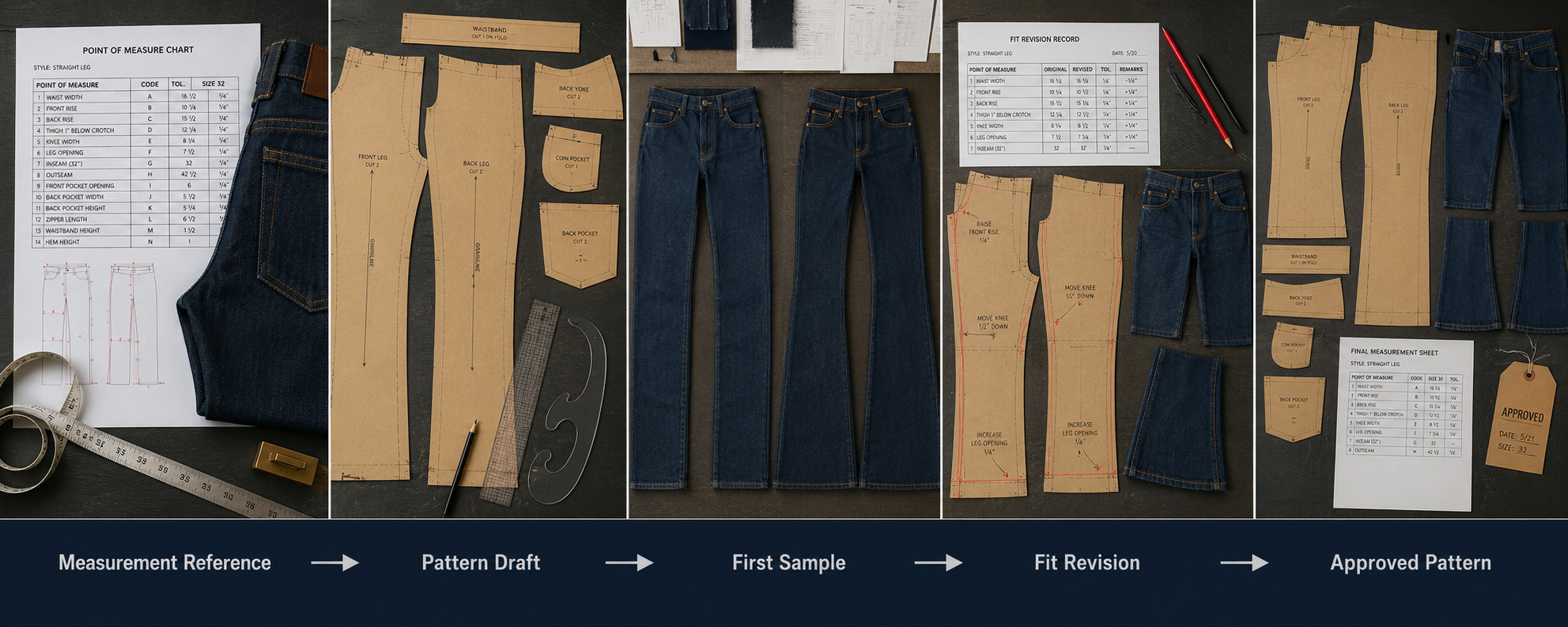 Pattern Making for Different Jeans Styles
The paper pattern converts the approved measurements and design details into individual garment panels. These may include front and back legs, waistband, yoke, pockets, fly pieces and other construction components.
Straight-leg jeans require consistent shaping from the thigh through the leg opening. Flare jeans need a controlled transition between the thigh, knee and hem. Denim overalls involve additional bib, strap, pocket and side-opening components. Each pattern should match the intended fabric and construction rather than being reused without adjustment across unrelated styles.
Pattern development is coordinated with the selected material because rigid and stretch fabrics do not behave in the same way. Fabric composition, weight and recovery can be reviewed through our Denim Fabric & Material Options page.
Fit Sample Review and Revision
The first sample is used to review silhouette, balance, construction and key measurements. Buyers should check the garment against the tech pack or confirmed measurement chart rather than relying only on general visual appearance.
Useful sample feedback includes:
- Revised measurements
- Marked photographs
- Comments linked to specific measurement points
- Required construction changes
- Updated fabric or wash references
- Confirmation of accepted details
Feedback should be consolidated into one revision document. Conflicting comments from separate messages can lead to unnecessary sample rounds and increase development time.
Typical sample development takes around 7–15 days, depending on pattern complexity, fabric availability, wash and trims. The complete submission and revision process is explained on our Tech Pack & Sample Development page.
Post-Wash Measurement Control
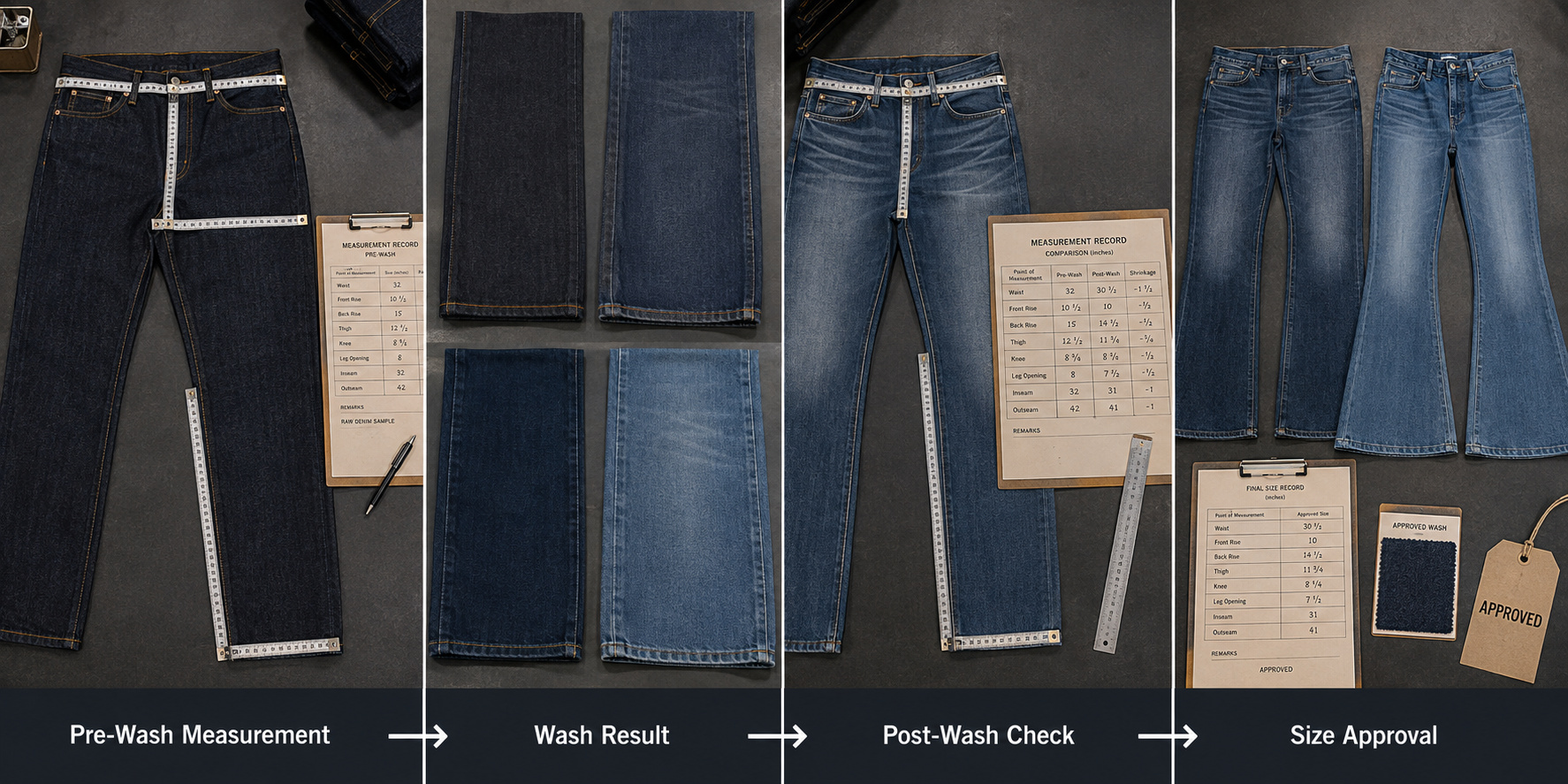
Denim garments should be assessed after the required wash because washing can change the waist, rise, inseam, leg opening and overall shape. Stretch and cotton-blend fabrics may also respond differently from rigid cotton denim.
The sample review should cover:
- Post-wash measurements
- Shrinkage against the intended specification
- Waistband and seam shape
- Leg balance and twisting
- Symmetry
- Fabric recovery
- Final hand feel
Where adjustments are necessary, the pattern or measurement specification should be revised before pre-production approval.
 Size Range and Pre-Production Approval
After the base fit is approved, the required size range can be prepared around the confirmed specification. The buyer should review size increments and advise whether particular markets or customer groups require adjusted grading.
Before bulk production, the approved pattern, measurement chart, fabric, wash, construction and tolerance should be aligned as one production reference. Bulk garments are then measured and inspected against these confirmed details.
Customized orders usually start from around 100 pieces per style. The workable MOQ depends on fabric, wash, color, trims, construction and size assortment. For an evaluation, provide the reference size, full size range, measurement chart, fabric requirement, wash reference, quantity per style and color, and any target fit comments.